Deprecated: Creation of dynamic property WP_Object_Cache::$global_prefix is deprecated in /home/aoiusa/public_html/wp-content/object-cache.php on line 468

Deprecated: Creation of dynamic property WP_Object_Cache::$blog_prefix is deprecated in /home/aoiusa/public_html/wp-content/object-cache.php on line 469

Deprecated: Creation of dynamic property WP_Object_Cache::$cache_hits is deprecated in /home/aoiusa/public_html/wp-content/object-cache.php on line 475

Deprecated: Creation of dynamic property WP_Object_Cache::$cache_misses is deprecated in /home/aoiusa/public_html/wp-content/object-cache.php on line 476
Turkey reaches out to Greek Christian minority – AOI – The American Orthodox Institute – USA

Turkey reaches out to Greek Christian minority

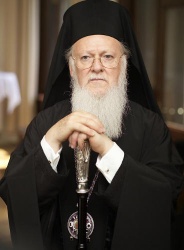
His All Holiness Ecumenical Patriarch Bartholomew
By Ivan Watson and Yesim Comert, CNN

Within the last 15 days, several Greek Orthodox bishops have crossed oceans and continents to travel to a police station in Istanbul where they picked up an unexpected gift: Turkish passports.

Since September, the Turkish government has granted passports and Turkish citizenship to at least 17 senior foreign clerics from the Greek Orthodox Church.

“This is a real surprise,” said Father Dositheos Anagnostopulos, a spokesman for the Ecumenical Patriarchate of Constantinople, in an interview with CNN on Friday.

The Turkish passports may mark a turning point for the patriarchate, an ancient and beleaguered Christian institution based in Istanbul that some observers feared was on the verge of dying out.

Turkey is home to a dwindling community of fewer than 3,000 indigenous Greek Orthodox Christians.

Granting citizenship to foreign clerics dramatically expands the pool of eligible candidates to succeed the current ecumenical patriarch, 70-year old Bartholomew, after he steps down.

“It is a significant change because at last the patriarchate can continue with its own norms and laws,” Anagnostopulos said.

The ecumenical patriarch’s followers believe he is the 270th spiritual descendant of the Apostle Andrew.

For decades, the Turkish government has refused to recognize the patriarch’s title, which means “first among equals.” The ethnic Greek minority in Turkey was long an object of suspicion as a result of ongoing tensions throughout the 20th century between Turkey and neighboring Greece.

Discriminatory government policies prompted tens of thousands of ethnic Greeks to flee Turkey in successive waves of emigration starting in the 1950s.

Recently, however, the Turkish government has quietly taken steps to ease restrictions on the patriarchate.

Last week, Turkish authorities returned ownership of a century-old orphanage that had been seized from the patriarchate in 1997.

Earlier this year, lawyers from the patriarchate won a legal battle over ownership of the historic wooden building before the European Court of Human Rights.

The court fined the Turkish government 26,000 euros and ordered it to return the property.

Finally last August, Ankara allowed Bartholomew to hold religious ceremonies in a cliffside Byzantine-era monastery near the Black Sea for the first time since the 1920s.

“A more tolerant society is emerging in Turkey,” said Egemen Bagis, Turkey’s top negotiator in its troubled bid to join the European Union.

“The situation in Turkey might not be perfect. But it is definitely better. And it is improving day by day,” said Bagis, at a religious freedoms conference at the European Parliament in Brussels last month.

Bagis, Turkey’s minister for European Union affairs, gave the speech after receiving an award for “his efforts on behalf of religious minorities in Turkey” from an American Greek Orthodox community leader.

Despite these strides forward, Patriarch Bartholomew, who is believed some to be the spiritual leader of the world’s 250 million Orthodox Christians, has not dropped his demand that Ankara reopen the long-shuttered Halki
Seminary.

Turkey ordered the theological school, which trained generations of Greek Orthodox priests, closed in 1971.


Posted

in

by

Comments

20 responses to “Turkey reaches out to Greek Christian minority”

  1. Nick Katich

    From the Aeneid:

    By destiny compell’d, and in despair,
    The Greeks grew weary of the tedious war,
    And by Minerva’s aid a fabric rear’d,
    Which like a steed of monstrous height appear’d:
    The sides were plank’d with pine; they feign’d it made
    For their return, and this the vow they paid.
    Thus they pretend, but in the hollow side
    Selected numbers of their soldiers hide:
    With inward arms the dire machine they load
    And iron bowels stuff the dark abode.
    *********
    Laocoön, follow’d by a num’rous crowd,
    Ran from the fort, and cried, from far, aloud:
    ‘O wretched countrymen! What fury reigns?
    What more than madness has possess’d your brains?
    Think you the Grecians from your coasts are gone?
    And are Ulysses’ arts no better known?
    This hollow fabric either must inclose,
    Within its blind recess, our secret foes;
    Or ‘t is an engine rais’d above the town,
    T’ o’erlook the walls, and then to batter down.
    Somewhat is sure design’ d, by fraud or force:
    Trust not their presents, nor admit the horse.’

    I would have thought that the Greeks would have learned better from their ancient cunning and not fall into the trap of Islamic cunning.

    Oh well, “Something that’s sure designed by cunning and not by force…Trust not Turkish presents, nor accept their Turkish horse.”

  2. Nick, as a Greek-American who had both grandfathers fight in the Greek army that was within sight of the walls of the City, I can’t tell you how mortified I am that bishops of my blood would sell their birthright like Esau for this thin gruel.

    And what will they have gained by it? None of the other patriarchates are going to ever accept the supremacist claims of Constantinople. In addition, it is yet another nail in the coffin of American unity. I would like to know the names of the bishops in question. If any of them are GOA bishops, then we can be sure that they have completely misread the American Orthodox landscape.

    1. Nick Katich

      George: I have no doubts that many of them, if not most, are GOA. What is incredible is this: If you look at the Turkish Constitution, even their so-called freedom of religion is curtailable if the exercise thereof is perceived to be a threat to the state or its unity. That’s pretty broad and ambiguous as you might expect. If any of the bishops try to support any pro-Greek position (e.g. Cyprus), they will be arrested the moment they land for a synod meeting and, now being, at best dual nationals (unless one condition was that they give up their US national staus), their ain’t a thing the US can do. Therefore, they will have to be silent. In short, they purchased the potential to be the Phanarion Archbishop in exchange for agreeing to be silent on issues that affect their people. That is worse than simony. It’s the other double “S” — Sheer Stupidity. At least Judas got 30 pieces of silver for his betrayal. These guys got a piece of paper with a fine crescent moon on it.

      1. George Michalopulos

        Nick, as usual, you raise some excellent points. The only hope I have is that all this byzantine gamesmanship is ultimately unChristian and thus will all come to naught. Wouldn’t that be ironic though? Bartholomew, in trying to breathe new life into the Phanar, will only be making it even more a creature of the Turkish state (which is becoming even more Islamicized).

        Basically, I’ve come to believe that the present patriarch is analogous historically to Romulus Augustulus, the last Emperor of Rome in the West. Perhaps I’ve been unfair: it’ll probably be the next one who has that position.

        There is one way out: if the Russians place their own bishops on the Holy Synod and if they engage in a sincere yet subtle, form of evangelizing the Turkish population in and around the environs of Istanbul. But that’s a stretch at this point. By having GOA bishops step up, the Phanar is effectively shutting down this avenue, which is actually quite a pity, as it would have been the more Christian.

        On a side note, do you agree with my assessment that any chances for unity coming out of the Episcopal Assembly are dead?

        1. Nick Katich

          At the moment, I do believe it is quickly dying and I see no good faith that will revive it, sad to say.

        2. Dean Calvert

          Hi George,

          Re: Basically, I’ve come to believe that the present patriarch is analogous historically to Romulus Augustulus, the last Emperor of Rome in the West. Perhaps I’ve been unfair: it’ll probably be the next one who has that position.

          Interesting analogy. As I thought about it, I’d suggest it is MUCH later than Romulus Augustulus…perhaps more like the late Comneni or even Constantine Paleologos.

          Keep in mind that after Rome fell in the West, the empire entered a period, maybe 500 years, where there was still the fiction of an empire in the West. The Eastern emperors would give titles to various barbarian rulers – as ruling in their stead – a fiction, but a tangible remnant of the old imperial rule. There was a residue of Rome in the West, made at least temporarily tangible by the reconquest of Justinian. A historical “echo” of sorts.

          I’d argue that is closer to what we have been living in, in the Eastern Church, for the past 200 years…living with the remnant fiction of an operational pentarchy…when in actuality the pentarchy hasn’t been operating since the early Ottoman times (perhaps earlier).

          Think about it…all of the these fictitious titles, (Bp Savas, Bp of Troy? pleaaaaaaaaaaaase!), the notion of an ecumenical patriarch, ruling over 1000 people…all of it has been more fiction than real for decades. At the same time, the real, living church has passed on to the “live” patriarchates of the national churches, Eastern Europe and Russia…who continue to defer to the ancient, (but moribund) patriarchates for various reasons.

          That aside, I’m sitting here scratching my head about the reasons for these actions by Turkey. My gut tells me that Nick’s “Trojan Horse” comment is at least directionally correct. I also think anyone believing that Turkey wants “in” to the EC has not been paying attention to the changing geopolitical role of Turkey…it’s hard for me to believe they see placating the Europeans as serious priority any longer.

          That said, I think we make a mistake to try to figure out, rationally, where this will lead for the EP. I read a Thanksgiving prayer to the Theotokos every week after communion…one that I love. Part of it says, “free me from the slavery of my reasoning…”

          Or, as Abp Nathaniel has told us, many many times….”It’s His church and He will take care of it.”

          I don’t think it’s something we need to, or are capable, of figuring out…very similar to the path to unity here in the US.

          Let the Holy Spirit do His thing…we’ll look back, and think, “Yup…made sense all along.”

          Just my two cents.

          Best Regards,
          dean

          1. Harry Coin

            Dean,

            Something must be said about the need for and meaning of ‘a functional penarchy’ if as you write for so long the institution survives without activity on its part.

            Perhaps the whole thing is really a fiction and no evident burden layered on top of what really makes all this go: parish life.

            ‘Tail Wagging the Dog’.

            I challenge the readers, on Sunday when you are in church (you will be in church, yes?), look around you at who else is there and ask yourselves and one another: how many among those you see are joined or remain there because of the activity of anyone at ‘the diocese’ or ‘the archdiocese’ or ‘the patriarchate’? External groups the parish has funded all these years. Did they do national advertising that generated benefit? Were people inspired by pronouncements of synod leadership so they joined and remained for more than a season or two?

            Exactly.

  3. It is nice of Turkey to give Turkish passports to foreign bishops.

    Now, if Turkey will only reopen the Halki seminary, which it illegally closed in 1970, and give up its control of the northern third of Cyprus, which it illegally seized in 1974, it will be welcomed “with open arms” to the European Union, which Turkey is desperately is trying to join!

    1. George Michalopulos

      George, I’m gonna start holding my breath! Gee, the more that we think about it, the less of a bargain it looks.

  4. It is nice of Turkey to give Turkish passports to foreign bishops.

    Now, if Turkey will only reopen the Halki seminary, which it illegally closed in 1970, and give up its control of the northern third of Cyprus, which it illegally seized in 1974, it will be welcomed “with open arms” to the European Union, which Turkey is desperately trying to join!

    1. Nick Katich

      George:

      They might just do that. They want to get into the EU not only for their own reasons but the Muslim world wants them there so they can get another foothold in Europe. I doubt if most Europeans however are familiar with Muslim treachery. Remember the Treaty of Hudaibiya, O Europe, when you invite them to your table. It is one of Islams unadvertised “pillars”.

  5. cynthia curran

    Well, Odovacar was overthrown by Theodoric which I believe Zeno made the representive for the Empire in the West. Not until Justin the first’s reign were their talks about bringing Italy back directly under the Empire’s rule. And this probably lead to the death of Boethius and others since Theodoric wanted to keep his empire. Now, why was Justinian more interested in the west compared to the others emperors in Constaninople. He was an Illyrian or Thracian born to a peasant family that spoke Latin and not Greek. He probably didn’t learn Greek until his later childhood when his uncle Justin that had a military guard job in the palace sent for him. Also, North Africa had extarchs think from 532 to around 700 until the Moslems took over. Italy was a more complex situation the Empire still control the southern part of Italy around Naples and so forth, and Greeks had been in Southern Italy since before the Roman Republic started. The area in south Italy during Roman times was known as Magna Grecia, so it was easier for Constantinople to control Southern Italy since Greeks had been there for centuries. Rome, broke away I believe now 700 with the help of the Franks. Ravenna and Venice had a long history with the Empire even after the extrachs left. A lot of Italy fell into control by the Lombards, and only a small part of Spain was taken from the Visgoths.

  6. Michael Bauman

    Harry, your comment 2.1.1.2.1 misrepresents the ecclesial reality. The parish exists in its sacramental reality because of the bishop, as you know (and the bishops exist to serve the parishes to whom the sacraments give life).

    We need to be careful that in the midst of the failings of the bishops to act like the bishops we think we want, that we don’t fall into congregationalism.

    1. Harry Coin

      Michael, indeed plenty of focus on the dreaded labels by those who like labels like ‘our father in Christ’ who at the same time could not identify ‘his’ priests family members in a crowd. So we like our fictions, but they are beginning to threaten our future.

  7. Michael Bauman

    Harry, are we the Church or not? If we are, we will always be here. If not, it really doesn’t matter how ‘successful’ we are.

    I am blessed. I live in a Cathedral parish and we have a pastoral bishop who not only knows the priests under his charge, but the rest of us sheep as well. When he is in town and comes to coffee hour, he justs sits and talks with people. Every time I get the opportunity to talk to him like that, I learn something more about the faith. He is open, loving and without pretense. He protects his flock, not with grand gestures or even in any obvious way, but he does gather, feed and protect.

    Despite that, there are some who think of him as a tyrant because he does not hesitate to say no when he needs to.

    Without the authority he carries, our parish would fall apart sooner or later as we would loose our center.

    Without the Apostolic authority, we are not the Church. The questions are: where does that authority exist (in whom); how do we recognize it, and how are we to be obedient to it? Unfortunately, the situation we have in the Church right now makes all bishops, to an extent, vagrante bishops. “We all like sheep have gone astray, everyone to his own way….” To imply that life without a shepard is the solution, as it seems to me you do, is not the way to go.

    We need to demand more of our bishops, not less. We need to demand more of ourselves in terms of repentance and obedience, not less.

    Personally, I think the Church will seem to dwindle and even without overt persecution, there will be an official Church and an underground Church.

    1. Harry Coin

      Michael,

      As you read history you know that the church will always be somewhere on the earth– but whether it is where we are is never and was never a guarantee. What you think your are in, what I think I am in, we think is ‘the church’. So does everyone else in a church.

      Demanding whatnot, even as the canons require to retain office, from those in office not disposed to pay attention when inconvenient personally, hasn’t worked out so hot.

      The time for ‘demanding’ and other whining at those who have demonstrated the ability at listening we see before us is long past whether we are only modestly or greatly ‘sucessfull’. It has become a question of whether we will survive.

      Look at those who came together many centuries ago, even then after centuries of church history. Did they say ‘We cannot change on whom we dispense titles and ranks, we have centuries of history! We see priests remarrying and then they die in just a couple years and leave so many widows, so many orphans creating great scandal and suffering we must prevent. But we cannot change, we will be thought weak!’.

      No, they didn’t. And neither should we.

      We know senior empty nester proven and respected clergy who all in their hearts think of as bishops right here, right now, and would be recognized with that title by the church if only their wife was dead. Medicine has advanced– She lives! Rejoice. Only in the last 100 years. Let’s recognize them with the title they live and rejoice in the life of their bride as well.

      We must restore balance in the synods. The actual monastics who are celibate, and not merely required so to be, should be joined with those with the same Spirit given also the blessing of a not-dead wife. We cannot have laity watchdogs, the bishops must be seen to be capable of policing their own ranks. Synods, not a strongman who rewards loyalty by overlooking tragic defrockable faults again and again in exchange.

      1. Michael Bauman

        We agree. A functioning local synod that includes all of the bishops. Still need the bishops though. A real synod would reign in the problem of the ‘young, never married’; the problem of them not actually having an identifiable flock; work toward consitency on reception converts, how marriage outside the Church is to be treated, etc.

        One would hope they would also have a social witness that is cosistent with the teachings of the Church and allows for liturgical discipline for pols and others who take public positions that are not in accord with Church teachings.

        I would say that the Church is here, but we have a little difficulty in recognizing her and being part of her. After all the Holy Spirt is ‘everywhere present and fills all things…’

        I also understand your emphasis on the life of the parish as the test of whether we are in the Church or not.

        1. George Michalopulos

          somewhat along the line of this debate: has anybody heard anything about the recently created Episcopal Assembly for North and Central America?

          1. Dean Calvert

            George,

            Well…their website is finally up…only took 7 months…see it at http://www.episcopalassembly.org/

            It’s been up a month or so, but it really just went live a few days ago.

            Same guys gonna be running national health care…

            best regards
            dean

          2. Harry Coin

            Shall we just call it what it is? ‘The United Nations for Foreign Orthodox Bishops, populated by local ambassadors, and also, somewhere in a broom closet under the stairs, their local OCA hosts.’

            I like Dean’s comparison to the three thousand page ‘hope and change healthcare bill nobody voting for it read first’.

            I know we are not supposed to be like the Vatican, looks like we got that done anyhow. Lotsa foreign popes instead of one.

Leave a Reply to George Michalopulos Cancel reply

Your email address will not be published. Required fields are marked *


Notice: ob_end_flush(): Failed to send buffer of zlib output compression (0) in /home/aoiusa/public_html/wp-includes/functions.php on line 5481