Deprecated: Creation of dynamic property WP_Object_Cache::$global_prefix is deprecated in /home/aoiusa/public_html/wp-content/object-cache.php on line 468

Deprecated: Creation of dynamic property WP_Object_Cache::$blog_prefix is deprecated in /home/aoiusa/public_html/wp-content/object-cache.php on line 469

Deprecated: Creation of dynamic property WP_Object_Cache::$cache_hits is deprecated in /home/aoiusa/public_html/wp-content/object-cache.php on line 475

Deprecated: Creation of dynamic property WP_Object_Cache::$cache_misses is deprecated in /home/aoiusa/public_html/wp-content/object-cache.php on line 476
Inter-Orthodox Preparatory Commission begins its work in Chambesy – AOI – The American Orthodox Institute – USA

Inter-Orthodox Preparatory Commission begins its work in Chambesy

Source: Russian Orthodox Church

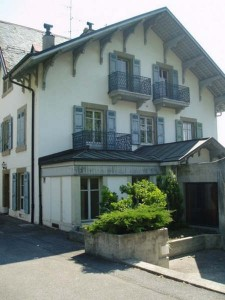
Inter-Orthodox Preparatory Commission for the Holy and Great Council of the Orthodox Church will meet from February 22 to 26, 2011, at the Ecumenical Patriarchate’s Orthodox Center in Chambesy, Switzerland. The meeting will be attended by representative of 14 autocephalous Orthodox Churches.

By the decision of the Russian Orthodox Church Holy Synod, the delegation of the Moscow Patriarchate will be led by Metropolitan Hilarion of Volokolamsk, head of the Department for External Church Relations and include Archbishop Mark of Berlin-Germany and Great Britain and Archpriest Nikolay Balashov, DECR vice-chairman, as an advisor.

The meeting has on its agenda the procedure of granting autocephaly and the topic of diptychs.


Posted

in

by

Comments

42 responses to “Inter-Orthodox Preparatory Commission begins its work in Chambesy”

  1. So… firstly, how does translation of discussions work at such meetings, and does it slow them down very much? Is there one language in which everything is put in, such as French? And does this hinder the ability to spell things out accurately in terms of word-definitions?

    Second: The two topics for the meeting seem like the kinds of things that will take more than a few days to hash out–but I guess that depends on whether the goal is any sort of agreement, or merely consideration of the actual problems. I wonder how many reports have been put together to be brought to this meeting, or if any committees have been dedicated to present on either topic.

    Finally: Would the title mean anything different if “Inter-” were dropped? Again, just wondering…

  2. I hope that the Inter-Orthodox Preparatory Commission makes some headway in achieving Orthodox unity of the various Orthodox jurisdictions in America. This is one situation that has been put on the “back burner” for too long. Indeed, it is a situation that must be addressed NOW.

  3. Nick Katich

    In a letter in 1977 to the Holy Synod of the Serbian Church, this is what St. Justin of Celije said about the two topics on the agenda:

    Most Reverend Bishops, I cannot free myself from the impression and conviction that all this points to the secret desire of certain known persons of the Patriarchate of Constantinople: that the first in honour of Orthodox Patriarchates force its ideas and procedures on all the Autocephalous Orthodox Churches, and in general upon the Orthodox world and the Orthodox diaspora, and sanction such a neo-papist intention by an “ecumenical council.” For this reason, among the ten topics selected for the council there have been inserted, indeed are the first, just those topics that reveal the intention of Constantinople to submit to herself the entire Orthodox diaspora – and that means the entire world! and to guarantee for herself the exclusive right to grant autocephaly and autonomy in general to all the Orthodox Churches in the world, both present and future, and at the same time to determine their order and rank at her own discretion (this is exactly what the question of the diptychs implies, for they concern not only the “order of liturgical commemoration” but the order of precedence at councils, etc.).

    Need I say any more? Although I am as much for unity as anyone else in America, I pray that nothing comes from this Commission and that Moscow holds its ground. I fear, as did St. Justin that, if this Council comes to pass:

    For should this council, God forbid, actually come to pass, only one kind of result can be expected from it: schisms, heresies and the loss of many souls. Considering the question from the point of view of the apostolic and patristic and historical experience of the Church, such a council, instead of healing, will but open up new wounds in the body of the Church and inflict upon her new problems and new misfortunes.

  4. GregF

    RE “the procedure of granting autocephaly”

    Is there a set of principles that could be applied, regardless of the locale, to solve the situations in the United States, Estonia, and the Ukraine?

    1. Harry Coin

      When ever has there been a procedure that the people not declaring autocephaly liked? Now there is to be a ‘procedure’ created to govern people here created and imposed by people who live not here? Well, you know, good luck with that.

    2. Nick Katich

      Greg:

      There is a Pre-Conciliar Conference and then there is an Inter-Orthodox Preparatory Commission. The former apparently is a higher body over the latter although the representatives of the 14 autocephalous Churches is virtually the same. The latter came up with some sort of formula last year and now the former is to study and come up with a formula which may be the sameor different.

      The formula in either case is not binding but is a proposed recommendation to the so-called Great and Holy Council. Is there any ecclesiology on this matter matter? The answer is NO. There is historical precedent that a local Church declares ‘autocephaly” and it takes anywhere from 200 years to 10 years for the Phanar to throw in the towel and recognize the autocephaly.

      The Phanar wants a procedure to be implemented and — you guessed it — it wants a central role in the process.

      The whole thing is a bunch of ecclesiological nonsense.

    3. Macedonia74

      and Macedonia

    4. Dean Calvert

      Personally, if history has taught us nothing else, it is that the Mother Churches (all of them) will be unresponsive to the needs of the local church, and will instead pursue policies designed to further their own, parochial interests.

      Istanbul has done that for years. Damascus has just proven the same. Ditto for Moscow and the others.

      The sooner we all learn that, the better.

      There is no “white knight” Mother church in this…they are all cut from the same cloth…some fractionally better, and some a little worse. At the end of the day they all view America as a colony, an unlimited ATM machine to be drawn on for various and sundry uses…none of which have to do with our salvation, or will advance the cause of Orthodox Christianity on this continent. I’m sorry if that thought offends some.

      The reality of the situation is this: It’s time to realize that the answer to Orthodox unity rests on us, the hierarchs clergy and laity on this continent, and not in some smoke filled rooms in Moscow, Istanbul, Chambesy, Sofia or Bucharest.

      You get the government you deserve. It’s time for us to make decisions here, and INFORM the Old World patriarchates what those decisions are. Other than that, I’d lose their telephone numbers…LOL

      Best Regards,
      Dean

      1. Macedonia74

        How “schismatic” of you Dean
        (I kid 😉 )

        1. Dean Calvert

          Dear Macedonia74,

          The family name is from Kalavryta….so we were born that way!

          Seriously, just to prove that there is no “process” for autocephaly (and never has been), it is fascinating to review the history of both the Bulgarian and Serbian churches during the Middle Ages.

          Both churches were granted autocephaly by C’nople (made autocephalous archbishoprics) as those countries rose in power (Bulgaria 924, then again in 1235, Serbia in 1219, then again 1766), only to have that autocephaly revoked later, as those countries were absorbed by surrounding kingdoms.

          The most interesting fact, to me, is that as the Ottomans conquered the Balkans, ALL of the independent churches were once again forcibly re-integrated back into the Ecumenical Patriarchate. The resentment of the native peoples caused by the pro-hellenism policies of the EP was so great that the Serbs would not support the Greek War in Independence when it broke out in 1821.

          Now, if there were any sensible criteria (theological maturity, size of the church etc) that determined autocephaly – how would one go about explaining that?

          The simple fact is, the ecclesial boundaries follow the secular ones. This has been the case since the Roman times.

          So, as the artificial state of “Yugoslavia” disintegrated into various states, it was only a matter of time until the churches followed suit (hence the Macedonian Orthodox Church, a Bosnian Church, probably a Montenegrin Church). Ditto for the Estonian, Georgian and Ukrainian churches (and a Belarussian one too, I predict) following the collapse of the Soviet Empire.

          It’s raw power politics….and it always has been.

          What these bureaucrats in Chambesy are going to do…Lord only knows!

          Best Regards,
          Kalavrytinos

          http://www.myriobiblos.gr/museum/gallery/1821/1821_pinakes/1.jpg

          1. Macedonia74

            Dean – I agree with you, I think 99.9%. However, what if there is no succession of Apostleship? For instance, the Macedonian Church is in de facto/de jure “Schism” yet they can claim the line of Bishops since the Autonomous Church Macedonian Bishops were consecrated by Serbs. The Montenegrin Church, I BELIEVE, cannot claim this. So, should they be granted Autocephaly just on territorial boundary?

            For what it’s worth, I have nothing against an Autocephalous Montenegrin Orthodox Church.

      2. Nick Katich

        Amen, Dean. However, the problem is that the bishops here are like fish sticks — no backbone. It was removed from them before they were elevated to their positions.

  5. Andrew

    Dean, you forgot the ultimate question. How do you pay for this Great Council? Beside nobody really knows how a Great Council works, votes, etc. Now if I were Patriarch Kiril in Moscow I would announce tomorrow that the Church of Russia will host and cover all expenses regarding the Great Council. The Bishops will have all the time they need in a nice Monastery close to Moscow to pray and deliberate. Rooms, meals, and comfortable arrangements will be available at this monastery (No pay per view however). For those bishops who have financial difficulties travelling, the Holy Synod will be glad to offer hospitality to cover your expenses. Modern technology will be available to broadcast the Council worldwide and the bishops will have all the time they need and the resources of the Russian Church at their disposal to chart the future of World Orthodoxy. The bishops need time to deliberate? Heck, you have months to deliberate.

    What do you think the EP would do? 🙂

    1. Geo Michalopulos

      Andrew, you raise an interesting point. I’ve often wondered if the logistics of a true universal council of this size and scope are possible outside of Russia. We must remember that previous church councils (ecumenical or otherwise) ofted dragged on for months. That’s why I’m not holding my breath. Only Russia has the wherewithal, facilities, and resources to host it.

      1. There used to be a debate on whether America was the $upport of the Phanar, or Greece. That debate has pretty much been ended now.

        I suspect that is why all this “pre-planning”: the Phanar doesn’t want a debate. It wants to cultivate an aura of inevitability to these decisions, to be rubber stamped at a quick pro-forma Council so it can say its ideas are “universal.” This “pre-planning” will be dragged out until the result is rigged, and the pace will be dictated by calculation of how much re$ource$ can be stretched, and how much they need to be stretched to get the ink on the rubber stamp. As soon as the rubber is inked, the council will be announced, held, and promulgated in rapid succession.

        We, however, have to see to it to keep this snow ball rolling that the Phanar started, that it crushes them.

        The Episcopal Assembly has been constituted. They can’t complain what direction it takes because, unlike Ligonier, it was supposedly their idea. If all this working together gets the episcopate and more importantly the Faithful to think of themselves as One Church, too bad. It such feelings of unity take notice that the Episcopal Assembly includes the OCA as a canonical Church, but without a reference point beyond here (i.e. no mother church), oh well. If such feelings lead the Faithful to push the Episcopal Assembly into the Holy Synod of the Autocephalous Church, ah the force of unintended consequences.

        So as lonng as the EA moves in this direction, I think it best that all this preplanning drags on to no end. Hopefully the Phanar will exhaust itself and the archons money while Moscow keeps it in check, while we go about the business of evangelizing this continent.

        Btw, I think a test will be coming with the formation of a seperate Canadian EA: Met. Soterius is no Abp. Demetrios. I think how he deals with the autocephalous OCA in Canada is going to bring things to a head there.

        If we get the likes of Abp. Stylianos as a replacement to Abp. Demetrios, then we pull the plug.

  6. Andrew

    George, next time anyone hears talk of the Great Council you should ask how is it paid for and are the logistics in place? I have a feeling that while Fr. Mark Arey and the folks at the Phanar may talk about a Council nobody has any real logistical plans. Therefore I question the sincerity of such statements.
    I also think the EP’s idea of a Great Council is a 3-day scripted photo-op at some European resort. What is most needed is a nice long ascetic council that runs for months. A little old school conciliarity is not such a bad thing.

    1. Nick Katich

      Andrew: You raise a good point. However, the Phanar and its dependencies do not view this so-called Great and Holy Council as one that will be attended by all bishops of the world. From day one when the work of the two commisions began, the Phanar has had in view that only the 14 autocephaleous jurisdictions would participate and that each would send “representatives” in such pre-agreed to numbers to the Council. That was one of St. Justin’s and others objections to the whole thing. You are also right that the plan is for scripting. Besides the two commissions, various of the autocephalous jurisdictions have, from time to time, been assigned to come up with draft documents on various topics, which are then reviewed by each commision in turn. This filtering process is designed to get to a scripted scenario. The same thing happend at the start of Vatican II with the Curia doing the scripting. Fortunately, there were some highly vocal bishops that were able to put some dent into the process which is why Vatican II took several years. I think the Phanar wants to steer this to a fait accompli: here are the papers, they have been worked on and refined over the decades, and we simply need to formally rubber stamp them. That is another reason why St. Justin said this would break up into schism and heresy. The Phanar has an agenda and is attempting to script, or rather put the Holy Spirit into a cage. It is not a scripted, caged Hypostasis.

      We should all have bad feelings about this Council happening. We should all pray to the Holy Spirit that the Council encounters a pre-mature death.

      1. Geo Michalopulos

        Nick, I agree with you completely. In talking with Fr Arey last year, I definately got the impression that this would not be a “universal” council in which every bishop is at least invited. 3 day photo-op at some nice resort, here sign on the dotted line, keep on moving nothing to notice here, etc.

        Then again, I’m rather hopeful. It seems that the ROC put out this press release and it seems to be indicating what it wants on the agenda (see paragraph 3). I imagine that if they sense the EP is dragging his heals then even if the council takes place the ROC will find some way to “understand” its findings in a way that are pleasing to the ROC.

        1. Nick Katich

          George: I find it quite interesting that Archbishop Mark is part of the delegation. In the past, the only Bishop was Met. Hilarion accompanied by one or two Archpriests. The background of Archbishop Mark is quite interesting. First of all, he is a ROCOR Bishop. Secondly, he received his theological training in Belgrade and was a member of a tighly knit group of diciples of St. Justin of Celije, which included now Metropolitan Amphilochios and Bishop Athanasius both of the Serbian Church. And we also know the views of St. Justin regarding the Phanar and this proposed Council. And, therefore, it is further interesting to note that the head of the Serbian delegation is Metropolitan Amphilochios.

        2. Fr. Mark Arey

          In response to George’s characterization of my remarks, I believe he is either remembering incorrectly or misunderstood my remarks. Clearly, a General Council of the Church would invite everyone who is canonically able to come, and would be held to do serious work, not in a resort setting.

          1. Nick Katich

            Fr. Mark:

            Father Bless.

            Does “canonically able to come” include the OCA? And, can they vote if they are “canonically able to come”? And, if they are not “canonically able to come”, will the Estonians (EP) and the Ukrainians (EP) be “canonically able to come”? And, if so, why?

          2. Andrew

            Fr. Mark:

            Thank you for joining us here. I do have a couple of questions that I believe readers would welcome your response to:

            1)Does every bishop “invited” to the Council and “canonically able to come” get to vote? If not who determines who votes and who does not? What are the rules of order for conducting business at a Great Council?

            2)How is a Great Council Funded? Is there any budget or logistical plan in place to hold an event of such grand scope?

            3)How is the Episcopal Assembly of the USA funded? How are expenses being paid for the next meeting and the ongoing operations of various committees?

            4)Are there any plans to broadcast the proceedings of the next Episcopal Assembly to the faithful much like the most recent visit of the Patriarch to the USA? If no, can you please state the reason canonically, spiritually or morally why such proceedings should not be broadcast to the faithful?

          3. “Canonically able to attend”-according to the practice of EVERY Ecumenical Council, that would mean every canonical Orthodox bishop would be able to attend.

            Not a consensus on who can come. Not a vote on who can come. Not a committee appointed to select who can come. At the Third Ecumenical Council Nestorius was given-over the objection of Rome, what some are calling ‘the primus” today-his seat at the council.

            If you are a bishop in an Episcopal Assembly, which were set up for this “Great and Holy Council” procedure, you have the canonical right to come to the “Great and Holy Council.”

            Is that what you mean, Father, by “canonically able to come.”

          4. Andrew

            Fr. Mark, permit me to humbly add a 5th question to my list above.

            5) Does the Ecumenical Patriarch hold any unique powers at the Great Council? For example, if the majority of fathers of the council vote on an issue and the Ecumenical Patriarch does not agree with the vote can His All Holiness overrule the vote or issue the equivalent of a veto?

            How about the Episcopal Assembly? If the majority of members of the Assembly vote in a manner that Archbishop Demterios disagrees with can he overrule the vote or issue the equivalent of a veto?

          5. George Michalopulos

            Fr Mark,

            thank you for clearing that up. I may have misremembered as it was just over a year ago. I wrote a more contemporaneous essay (dated March 2010) which has been published on http://www.monomakhos.com. I’d very much appreciate it if you took the time to read it. Although it was a first-hand account, if there are any mistakes or misunderstandings, please bring them to my attention.

            Geo

            p.s. I enjoyed meeting you and appreciate your coming to meet us last year. You were honest and forthright in your answers.

          6. Fr. Mark Arey

            Thanks all for your questions – I just don’t have the time to address them all at the moment. I would clarify my use of the words “canonically able” by saying that first and foremost, this means (to me) bishops whose ordinations have no impediment. Second, it would mean bishops who are not in schism from the Body of the Church.

            As far as the details of the process for calling a Great and Holy Council are concerned, I really am not in a position to know such things. My experience, however, teaches me that the funding and logistics necessary for such an event could be handled relatively easily.

            Lastly, on a personal note, let me thank you all for refraining from gossip during some obviously difficult days in the OCA. I hope and pray with all of you for a healthful and expeditious conclusion to the current situation.

          7. George Michalopulos

            Fr Mark, thank you for your gracious and merciful words to us all in this time of tempest. I enjoyed your address last year to us and I pray that should you find the time to read my appraisal, you will see that I spoke highly of your abilities and vision. If I’ve ever given offense, please forgive me.

      2. Andrew

        Nick, I agree…. what you describe is not a Council. Its a bureaucracy designed to delay action. We are at a time in history when it has never been easier to bring all the bishops of the world together in one place to meet in Council. Is there any real reason not to do it?

        Anything less than a true ecumenical council should be resisted at all levels. We either are a conciliar church or we are not a conciliar church.

        1. Eliot Ryan

          We are at a time in history when it has never been easier to bring all the bishops of the world together in one place to meet in Council. Is there any real reason not to do it?

          Indeed, for the first time in a thousand years the Orthodox Churches are politically free to hold a Council.
          The best place to bring all the bishops of the world together would be Mt Athos.

          Around four hundred Fathers came from all over the Orthodox world to attended each of the Seven Councils recognized today as Oecumenical.

          Councils are usually held with a reason: important administrative matters to define and discuss, the rise of new and powerful heretical movements which disrupt the workings of the Church.
          I do not know of such powerful heretical movements. All that comes to my mind is the ‘Green’ movement and the pagan practice of cremation.

          I fear that if this Council comes to pass will ultimately lead to the division of the Church from within.

          1. Nick Katich

            I agree with Eliot on the outcome of such a council. There is no need for one.

            I would correct one thing though. Except for Chalcedon, most of the other councils had considerably less than four hundred. Nicea had 318. Constantinople I had only 150. Ephesus had only 200. At Chalcedon 630 started but about 400 left before any canons were adopted. Only 165 were at Constatinople II. Constantinople III started with under 300 and only 174 signed their names to the decrees. The other left early. It is unclear how many were at Trullo but it was probably less than 200. It is also unclear how many were at Nicea II. The bottom line is that the councils were not well attended at all.

            I also agree with Eliot that it should be held at the Holy Mountain, if the monks would allow it, which is a big IF. Since Athos is not a place of luxury to which the bishops have become accustomed, it would die before it began for lack of attendance. Let’s hope that Chicago doesn’t offer the Palmer House and McCormick place free of charge. Then we would be in big trouble and the abyss would become great indeed.

          2. Alexander

            Who wants to bet a shiny nickel that if left to the Phanar, the Vatican, the WCC, and others are invited to send as many “observers” as they wish, but that scores of Orthodox bishops would be left “uninvited”?

          3. Michael Bauman

            Eliot, has not every council formalized divisions already existing? The Church was ‘united’ by excluding a whole bunch of folks who thought they were in the Church. In some cases those communions still exist as separate entities. Certainly few of the heresies condemned have gone from the human heart and mind.

            Do we not already have a divisions that many are refusing to acknowledge?
            A. Modernists
            B. Static traditionalists (including the ethno-centrists)
            C. Traditional Evangelists

            In a certain sense these are Christological differences because they represent vastly differing ecclesiological understandings as well as different soteriological approaches.

            We are a house divided against itself, IMO

            I do have a really difficult time with the unctious and arrogant language that is used to describe the event–but I’m just an uncouth Kansas boy. I remember the old marketing book: How To Swim With the Sharks Without Getting Eaten . One of the author’s points was: “Never sign anything in a room with a chandelier”: Too much hype, too much peer pressure, too little substance.

            To this poor ol’ Kansas boy, the whole thing seems like a room full of chandeliers.

            Whatever the outcome, we are responsible for how we respond to God’s word and His love. I have to rely on God to lead us through the morass.

            St. Basil and the other few who stood against Arius originally never left the Church to start their own thing. The modern mind being what it is, we already have folks leaving just because they don’t like the clothes their priest wears.

  7. David Lanier

    The statement in the article on autocephaly is a bit vague, but perhaps the goal is to try to get the EP to recognize the autocephaly of the OCA. Metropolitan Hilarion speaks very favorably of the autocephaly of the OCA and unification of the various jurisdictions in America in this article

  8. Macedonia74

    Some dude on Facebook posted that his Beatitude, Met. Jonah has resigned.

      1. Macedonia74

        I smell Dolmades in our future …

      2. Jamey Bennet just posted this on Facebook and has been making similar postings wherever this has spread:

        “I spoke with Monk Gregory just moments ago. He is the Metropolitan’s assistant, and lives with His Beatitude. He said unequivocally, IT IS NOT TRUE. Met. Jonah has not resigned. It is true that he spoke with some bishops about the possibility of a sabbatical, but even this is not occurring. According to Monk Gregory, he is not going anywhere.”

        I take this as a trustworthy source. Now… hopefully back to the topic.

        1. Macedonia74

          I don’t always know what to think about OCAnews, but this report makes it out to seem that His Beatitude wasn’t the “American” primate we (or at least I) envisioned. This is either very disconcerting, or a smear campaign and very disconcerting.
          http://www.ocanews.org/news/JonahLeaveofAbsence2.25.11.html

  9. Eliot Ryan

    Michael:

    In a certain sense these are Christological differences because they represent vastly differing ecclesiological understandings as well as different soteriological approaches.

    The Orthodox Church has the fullness of truth, not by our merits but by God’s mercy. We have a treasure, but we have to uphold this treasure and we would be betraying our Savior if we deny it. Metropolitan Kallistos

    Orthodoxy claims that its sacraments are essential to salvation. The Sacraments are Christ. He is the true minister. The sacraments of other non-Orthodox Christians are incomplete or inexistent.

    For Orthodox, the Seven Sacraments of the Church :

    1- Sacrament of Baptism.

    2- Sacrament of Confirmation

    3- Sacrament of Confession

    4- Sacrament of Eucharist

    5- Sacrament of Unction of Sick

    6- Sacrament of Matrimony

    7- Sacrament of Priesthood.

    are far more than symbolic acts. They transmit grace to the believer, resulting in true communion with Jesus Christ. The Sacrament of Confession was instituted by the Lord Jesus when He said to His pure disciples:

    Assuredly I say to you, whatever you bind on earth will be bound in heaven, and whatever you loose on earth will be loosed in heaven” (Matthew: 18:18), and after Resurrection He said, “As the Father has sent me, I also send you and when He had said this, He breathed on them, and said to them “Receive the Holy Spirit. If you forgive the sins of any, they are forgiven them, if you retain the sins of any, they are retained. (John 20: 21-22).

    .
    Fasting and prayer are very important because some demons come out only by “prayer and fasting”. Orthodox worship God as if He were real and this is the proper form of worship, because God is real! The evangelicals commonly reject the liturgical approach to worship. One can even notice disdain for the Holy Liturgy from their side. Some tend to favor a frightfully simplistic message and practice, but want to still call it Orthodoxy.
    .
    Any changes in the Church’s dogma made to accommodate newcomers would be a great mistake and a betrayal of those who give their life to preserve the fullness of truth.
    .
    Laziness, spiritual and intellectual, and pride are the causes of ignorance of Orthodoxy and disrespect for the richness of Orthodox history, worship and teaching.

    Every bit of Church dogma was imposed through the blood of those ready to give their life to defend it; being a matter of life – not merely a theoretical speculation. (Theologian Fr Dumitru Staniloae)

    If for any reason a Council would decide to change the 2,000 year old Orthodox practice and justify it by citing the helplessness of modern man, such a Council would be not only non-Orthodox, but actually anti-Orthodox.
    .
    It is true that we are helpless. Many of those who call themselves traditional Orthodox Christians are helpless when it comes to fasting and long prayer services. But we have to be humble and acknowledge it and strive to improve. To bring down the standards and to dilute everything is not going to do any good. We are not saved by our own works alone. We are saved by grace through our own faith, and faith is a gift from God
    “The sacrifices of God are a broken spirit: a broken and a contrite heart, O God, you will not despise.” Psalm 51:17

    1. Nick Katich

      Eliot. Except for Moghila, Bulgakov and some others, we do not limit the Church’s sacraments to seven or any other number. The Greater and Lesser Blessing of Waters are sacraments. The blessing of food is a sacrament. The anointing with chrism on certain feasts is a sacrament. Etc., etc., etc.

  10. Michael Bauman

    Eliot,

    I am not looking for any easing of praxsis, just the opposite. IMO those who reject or trivialize the traditional practice in favor of current political idelogy do a great disservice to the Church.

    I also feel that those who are rigid in their practice and want everything to stay the same without really engaging the United States or the people here do an equal disservice.

    We have the opportunity in the US to find a new balance that will allow the Holy Tradition to be fully expressed but in a manner that is more consonent with our culture. The hierarchy has to be more responsive and flexible, the laity has to be more patient and we need to learn obedience. All of us need to open our hearts more to God in humility.

Leave a Reply to George Michalopulos Cancel reply

Your email address will not be published. Required fields are marked *


Notice: ob_end_flush(): Failed to send buffer of zlib output compression (0) in /home/aoiusa/public_html/wp-includes/functions.php on line 5481