Deprecated: Creation of dynamic property WP_Object_Cache::$global_prefix is deprecated in /home/aoiusa/public_html/wp-content/object-cache.php on line 468

Deprecated: Creation of dynamic property WP_Object_Cache::$blog_prefix is deprecated in /home/aoiusa/public_html/wp-content/object-cache.php on line 469

Deprecated: Creation of dynamic property WP_Object_Cache::$cache_hits is deprecated in /home/aoiusa/public_html/wp-content/object-cache.php on line 475

Deprecated: Creation of dynamic property WP_Object_Cache::$cache_misses is deprecated in /home/aoiusa/public_html/wp-content/object-cache.php on line 476
Unpublished paragraphs for the Orthodox audience – AOI – The American Orthodox Institute – USA

Unpublished paragraphs for the Orthodox audience

STOP THE PRESSES! HELLENIC VOICE PUBLISHED ARTICLE AFTER ALL! SEE: THE HELLENIC VOICE!

Below are the paragraphs that I included in my article (Ground Zero is American Holy Ground. No Mosque Near Ground Zero) that was intended for an Orthodox audience. The Hellenic Voice, which has published everything else I submitted, apparently decided not to go with it. It was written nearly three weeks ago, long before the issue exploded into the national consciousness.

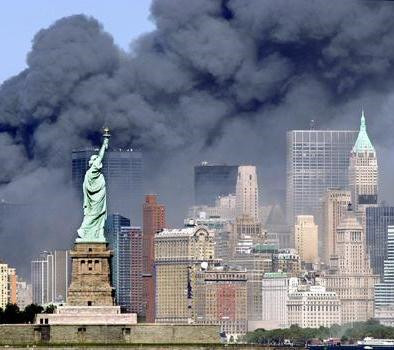
Orthodox Christians however, can do something about this. St. Nicholas Greek Orthodox Church was part of the wreckage of that catastrophic day and needs to be rebuilt. Why not rebuild it as a memorial to the fallen Americans (this would include not only Greek Orthodox Americans but all Americans regardless of religion) who died that day?

The Greek Orthodox Archdiocese has the legal, political, and most important, moral and historical authority to rebuild St. Nicholas. It could function as a place of retreat and refuge; a place to find meaning about an event of unfathomable meaning much like the Viet Nam Memorial in Washington does for veterans and their loved ones, or Ellis Island does for the children of the immigrants who passed through it.

We are no strangers to suffering and understand that the only safeguard to culture is religious faith – concrete, existential encounter with the risen Christ who makes all things new, who transforms death into life, who breathes life into people that are dispirited and weary of the confusion and turmoil in which they live. That is what the Church, if it indeed lives in Christ, offers to broken world.

A project like this would require visionary leadership and courage. But great things can happen with vision and courage. The Orthodox Christian tradition was the well from which many of the ideas that shaped America was drawn. America in turn grew to shelter and bless those people whose forbears drank from that well. We can give something back to America and strengthen those original foundations by our gift.

Full article (with additional paragraphs) below.

Don’t Let Muslims Define 9-11

NAPLES (Catholic Online) – Muslims have it over secularists, but not Christians – at least the clear thinking ones anyway. The Muslim proposal to build a mosque two blocks from Ground Zero is not only an affront to all people who died there, but another chapter in a cultural jihad that seeks to replace the cultural traditions of Christendom with Sharia, the code of law derived from the Koran and from the teachings and example of Mohammed.

First the caveats. Yes, most Muslims are not jihadists; they may see the non-Muslim as an infidel but won’t resort to violence to defeat him. Yes, Muslim believers pose no threat to American cultural norms and legal structures as long as their numbers remain small. Yes, every Muslim citizen should be afforded the rights due to all Americans regardless of their religion.

The $100 million mosque however, represents more than religious freedom. Named the “Cordoba House,” it is meant to recall the great Cordoba Mosque built in Cordoba, Spain in 784 after the Muslim conquest (and etch it forever in the West’s historical memory). The Cordoba House in New York (which assuredly will function as a mosque) is meant to broadcast to the world that the destruction of the Twin Towers was a victory for jihad.

It’s a perverse twist to a practice that Christians hold dear: Some ground is sacred and must reference God to make sense of the events that took place on it.

Sacred ground is more easily understood by European Christians than their American counterparts (the relative youth of America may have something to do with this). Some events are so catastrophic, or prove to be so historically significant, that they transcend the categories we normally employ to explain them. These events must  reference something higher to make sense to us; they must appeal to something outside of ourselves that can explain paradox or recognize great moral courage or even reconcile inhuman suffering.

America has places of holy ground, even though most Americans, while drawn to those places and often deeply moved by their visits to them, don’t always grasp that the sacred character of those places is what moves them. Appomattox, where the American Civil War ended with Lee’s surrender to Grant, is one such place. The USS Arizona Memorial at Pearl Harbor comes to mind. Ellis Island is another. There are surely more.

The secularists don’t see it that way of course. But their blindness (which must inevitably default to perceiving these question only in legal categories) is the result of an a priori rejection of the sacred dimension of life.

You can think of secularism as merely a long layover from one city to the next, although this trip takes a few centuries instead of hours. Secularism is not strong or deep enough to sustain a culture. It can’t and won’t hold.  Secularism lives off the religious heritage of Christianity (and Judaism before it), and if Christendom ceases to be Christian the secularist will end up embracing Islam . 

The Muslims understand this. Some Christians do too. That is why building a mosque represents not, as some Americans think, an example of American tolerance towards “religious belief,” but the continuing desacralizing of American culture under the rubric of tolerance.

If the mosque is built, we will see the slow but certain drift to referencing 9-11 to the god of Mohammed rather than the God of Abraham. And if we drift far enough, religious  freedom will die and so will the political and cultural freedoms that are its progeny.

Orthodox Christians however, can do something about this. St. Nicholas Greek Orthodox Church was part of the wreckage of that catastrophic day and needs to be rebuilt. Why not rebuild it as a memorial to the fallen Americans (this would include not only Greek Orthodox Americans but all Americans regardless of religion) who died that day?

The Greek Orthodox Archdiocese has the legal, political, and most important, moral and historical authority to rebuild St. Nicholas. It could function as a place of retreat and refuge; a place to find meaning about an event of unfathomable meaning much like the Viet Nam Memorial in Washington does for veterans and their loved ones, or Ellis Island does for the children of the immigrants who passed through it.

We are no strangers to suffering and understand that the only safeguard to culture is religious faith – concrete, existential encounter with the risen Christ who makes all things new, who transforms death into life, who breathes life into people that are dispirited and weary of the confusion and turmoil in which they live. That is what the Church, if it indeed lives in Christ, offers to broken world.

A project like this would require visionary leadership and courage. But great things can happen with vision and courage. The Orthodox Christian tradition was the well from which many of the ideas that shaped America was drawn. America in turn grew to shelter and bless those people whose forbears drank from that well. We can give something back to America and strengthen those original foundations by our gift.

Fr. Johannes L. Jacobse is an Orthodox priest living in Naples, Fl. Fr. Jacobse edits the website Orthodoxy Today  and is President of the American Orthodox Institute .


Posted

in

by

Tags:

Comments

4 responses to “Unpublished paragraphs for the Orthodox audience”

  1. T. Nathaniel

    “The Orthodox Christian tradition was the well from which many of the ideas that shaped America was drawn. America in turn grew to shelter and bless those people whose forbears drank from that well.”

    How is the above quote at all factual and accurate? The history of Orthodox Christianity in Western Europe either predates the Schism or postdates the Communist Revolution with its accompanying diaspora. The ideas that shaped America were the ideas of Western Europe. Orthodox Christian ideas can only have shaped the American founders then to the extent that Western Europe remained faithful to Orthodox Christian principles.

    It seems much more accurate to me to say that the Enlightenment was the well from which the Founding Fathers drank, and it is incredibly difficult to reconcile Enlightenment principles with Orthodox Tradition.

    To convince me of the truth of what you have said, you would need to show that someone like John Locke, whose ideas permeate our founding documents, was in keeping with Holy Orthodoxy. Can you do this?

    1. Fr. Johannes Jacobse

      The foundational anthropology, that man is created to be free, and that the source of this freedom is God, and that man has as his final touchstone this same God, came from somewhere. In fact, the West, while ameliorating these essential ideas in the cultural soil of the West, also became their protector after the fall of Byzantium and as Russia emerged from feudalism into the modern age. (You can see I am not a West basher; West-bad, East-good is a dichotomy I don’t hold to.)

      Orthodox Christian ideas can only have shaped the American founders then to the extent that Western Europe remained faithful to Orthodox Christian principles.

      Not too sure what you mean hear by “Orthodox Christian principles” (existential truth cannot be reduced to “principles”), but I would put it this way: The American founding was shaped by an anthropological vision that reaches deep into the legacy of the Christian East. It’s one reason why so many buildings in DC are neo-classical.

      1. T. Nathaniel

        Father Johannes,

        What I meant by Orthodox Christian principles is precisely the kind of thing that you lay down here in articulating what you take to be a distinctly Christian and Orthodox anthropology.

        You say that this anthropology consists in the claim (or principle) that humans are free, that the source of the freedom is God (here I would want to add that this is both the originary and eschatological source, but you already anticipate this in your next “principle”), and that our final touchstone is God.

        While I agree with what you have said here, I think that the West can be bashed on significant points for generating an apostate culture. One of the Orthodox critiques of Catholicism that I have heard and agree with is that the Reformation stands as proof that something went terribly wrong with the Roman church that precedes it. I think that we can say the same thing about Secular Humanism, Enlightenment Rationalism and many of the other godless ideas put forward during the modern period in France, Germany and Britain. All of these stand as proof that something went terribly wrong in the Christianity of the West. This is why I am uncomfortable asserting that an Orthodox Christian anthropology underlies the American founding documents. I think that the burden remains on you to show that this is in fact the case.

        This would be even more difficult if we were to define an Orthodox Christian anthropology with reference to the Orthodox ascetical tradition since the Orthodox understanding of the nous and of the power of the prayer of the heart are completely absent from Western spiritual and philosophical writings. But certainly these are very important elements of any Orthodox Christian anthropology? The ascetical tradition sees humans as in the image of God and struggling to attain to the likeness of God as well. Can we say the same thing about the anthropology that underlies Western culture?

        To return to your comment, I think that the problem with Western culture and its American manifestation is that it amounts to a truncation or diminution of what you yourself have identified as the Christian anthropology that underlies it (again, I think that the anthropology that you articulate would have to be filled out with reference to the ascetical writings of the Fathers). For instance, of the three principles that you articulate, it seems to me that America’s founders would only be able to unequivocally agree to the first, that is, that humans are free. For when it comes to the second, that this freedom has its source in God, we would have to interrogate what is meant by “God” before we could determine whether there is real agreement. Considering that the Enlightenment movement was extremely skeptical of the Christian God, that Locke himself opposed all forms of religious enthusiasm, that Kant asserted that it is irrational to try to talk to a being that one cannot see and thus that prayer must be simply for our own moral edification (prayer itself being a kind of religious enthusiasm), and that Jefferson revised the bible to eliminate any semblance of the miraculous, I think it becomes more likely that America which is birthed in this soil is more deistic than Christian.

        This is only to speak of your first two principles. On the third there is no agreement at all. If freedom plays a role at all in Western culture it is as something that is valuable and to be protected so that people can decide on their own what is good and worth pursuing. It emerges as a value precisely when every other compelling vision of the good has disappeared. This is why religion is limited to the private sphere – it is an acknowledgment that no common vision of the good unites us. The only thing that unites us is the conviction that freedom at least is good as a necessary condition to achieving the good. While I too would agree with this, it is hardly a robust Christian anthroplogy and would be better termed an apostate anthropology – it is the anthropology that exists when one takes part of the Christian truth, discards whatever one finds unacceptable and then applies that part to the pursuit of this-worldly happiness. But again, this is hardly Christian and certainly not Orthodox.

  2. Magdalena

    America has places of holy ground, even though most Americans, while drawn to those places and often deeply moved by their visits to them, don’t always grasp that the sacred character of those places is what moves them. Appomattox, where the American Civil War ended with Lee’s surrender to Grant, is one such place. The USS Arizona Memorial at Pearl Harbor comes to mind. Ellis Island is another. There are surely more.

    The secularists don’t see it that way of course. But their blindness (which must inevitably default to perceiving these question only in legal categories) is the result of an a priori rejection of the sacred dimension of life.

    Succinctly and beautifully put.

    However, T. Nathaniel has a point.

Leave a Reply

Your email address will not be published. Required fields are marked *


Notice: ob_end_flush(): Failed to send buffer of zlib output compression (0) in /home/aoiusa/public_html/wp-includes/functions.php on line 5481