
Deprecated: Creation of dynamic property WP_Object_Cache::$global_prefix is deprecated in /home/aoiusa/public_html/wp-content/object-cache.php on line 468

Deprecated: Creation of dynamic property WP_Object_Cache::$blog_prefix is deprecated in /home/aoiusa/public_html/wp-content/object-cache.php on line 469

Deprecated: Creation of dynamic property WP_Object_Cache::$cache_hits is deprecated in /home/aoiusa/public_html/wp-content/object-cache.php on line 475

Deprecated: Creation of dynamic property WP_Object_Cache::$cache_misses is deprecated in /home/aoiusa/public_html/wp-content/object-cache.php on line 476
Muresan: Spinning – Is Anyone Serious About the Episcopal Assembly? – AOI – The American Orthodox Institute – USA

Muresan: Spinning – Is Anyone Serious About the Episcopal Assembly?

Source: Orthodox Christian Laity

By Ronald Andre Muresan

I was four years old in 1960, the year the SCOBA Orthodox bishops’ council was formed, under ever-mounting calls (GOYA, SOYO, CEOYLA, etc.) for a North American Orthodox Synod, independent of the Old World, neither more nor less than the countries our ancestors came from. My father was 39 then, fifteen years younger than I am now. Eisenhower was president, and Queen Elizabeth of England was – still having babies. 

To put it charitably, SCOBA elevated caution over action. That is how it felt to many of us in CEOYLA’s leadership councils. One might say they spent 50 years riding the brakes, the whole time reassuring us we were heading up-hill. 

The 20th Century came and went. Hopes were raised at the 1994 Ligonier bishops’ conference, then dashed when the Holy Synod in Istanbul, Turkey (ancient Constantinople) reacted by retiring the dean of North American archbishops, Archbishop +Iakovos, who had seemed on the point of breaking the logjam and bringing about a united Synod of North America. SCOBA settled back into its status quo, and we watched the New Millennium come and go too. No united Orthodox voice. So far removed from public life that the U.S. National Cathedral “forgot” to invite a single Orthodox bishop to the National Cathedral Memorial Service after 9-11. 

[pullquote]Then last year, 15 years after Ligonier, SCOBA watched itself voted out of existence by an Orthodox council in Chambesy, Switzerland. Not one American bishop cast a ballot, because none was even invited – they were locked out of this crucial decision about our church life.[/pullquote]

Then last year, 15 years after Ligonier, SCOBA watched itself voted out of existence by an Orthodox council in Chambesy, Switzerland. Not one American bishop cast a ballot, because none was even invited – they were locked out of this crucial decision about our church life. A synod with no say over its own existence – can be expected to accomplish – what? 

SCOBA has now been replaced by a new Episcopal Assembly, 55 bishops who gathered in New York City last summer. They limited themselves to merely electing officers, cautious not to rush matters: they will not even be naming committees until sometime before their next annual meeting, in June 2011. 

And now, some Old World apologists are spinning all this, cautioning that we might be getting ahead of ourselves. We are told after fifty years to again content ourselves with the mere fact that all our bishops assembled in one place. The implication: getting things done promptly is somehow risky. 

Their motto has a familiar ring to it: "Speed is not the goal, Results are.” But an inconvenient fact confronts them: doing things their way has produced a half-century of no results. On the contrary, our separate “jurisdictions” have hardened more and more, isolated webs of duplicative, competing institutions, diocesan cathedrals next-door to each other, pious toil wasted, stumbling blocks that will add years of effort and hard feelings when they would have to be closed or sold. 

Half a century of slow-walking have left American Orthodoxy in limbo, lacking even the spirit to protest at how the Old World Patriarchates disregard and snub us, deliberately denying us the right to vote on our church’s future. It is simply wrong to say that “due process is a Western, un-Orthodox concept.” Through the centuries, even those accused of the most devilish heresies have been allowed the right to be present at Church Councils, to argue their case and even vote on their own condemnation. One of the only Councils to exclude the accused has ever since been called The Robbers’ Synod. Due process was canonical before it was democratic. 

I say that the “take it slow” apologists are hard pressed to make their case. The sixty years since World War II have yielded dubious results. The pages of history, the gospel, even  medicine, teach us what results to expect when delay is piled on delay, frittering away precious time as we leave The Bridegroom standing at the door, knocking. Once the ship has sailed (or fracture untreated), you find yourself stranded at the dock, or. . . . Our ancestors – and we – sacrificed too much to let Orthodoxy be left to dissolve into the mists of history! 

Our Old World mother Patriarchates seem bent on keeping us tied to their apron strings, but a half century of “talking about talking” is enough. Just last year brought yet another attempt to buy time: the Ecumenical Patriarchate teasingly announced, “Autocephaly will be on the agenda at the coming Great and Holy World Council of Orthodoxy, which is being prepared, perhaps as early as 2013.” A Council that has been a-planning for fifty years?! I am skeptical, but out of respect – for now – I won’t take the past half century as proof of bad faith. 

I have a straight (multi-part) question for Fr. Mark Arey, spokesman for the Greek Archdiocese and by extension, for the Ecumenical Patriarchate (EP) of old Constantinople.

I should think he would have a straight, ready answer:  “In which city on God’s Good Earth has the EP blocked out the 1,000+ rooms needed for this 2013 Great & Holy Council? (each bishop with his deacon + theologians + canon lawyers + seminary deans + monastics + the faithful + observers + press) “For what specific dates in 2013? “For 6 days? 6 weeks? 6 months?” “And those exact hotel names, please?” Enough with secrecy! 

[pullquote]We North American Orthodox need to face up to the lessons of history and take matters into our own hands, unfamiliar as that may be for us: No nation, church or any other group has ever been given independence. They proclaim it themselves, declaring it the whole world over.[/pullquote]

We North American Orthodox need to face up to the lessons of history and take matters into our own hands, unfamiliar as that may be for us: No nation, church or any other group has ever been given independence. They proclaim it themselves, declaring it the whole world over.

Hierarchs of America! Please convene on Pentecost 2011, Spirit-driven, and declare independence. UNANIMOUSLY. Stop acting like skittish red-headed step-children. Stand up for yourselves – and us – just like the Mother Churches did.

The Ecumenical Patriarchate stonewalled for 141 years before it formally recognized the Church of Russia’s independence. The EP actually threatened to excommunicate the Church of Romania after it declared independence in 1866, until 1885. We Americans can either pass our next 141 years running this “3-legged race” or we can live the life of an independent Local Church, in fact, if not formally. I see no signs that at The Last Judgment the Savior will demand to see our Tomos of Autocephaly, our Charter of Canonicity. He’ll simply ask whether we insisted on creating a proper Orthodox Church structure to minister to “these, the least of My brothers.”  Here, in the blessed land where it pleased Providence that I and mine be born and live, as Orthodox.

Ronald Andrei Muresan

Posted

in

by

Comments

43 responses to “Muresan: Spinning – Is Anyone Serious About the Episcopal Assembly?”

  1. Scott Pennington

    Why are so many people worshipping this idol of American autocephaly? It is not a panacea for all that ails us. Having a local church with standards no higher than GOARCH would be a step backwards for some jurisdictions here. Moreover, the article gives the impression that there is this great outcry for autocephaly now. I don’t believe that is even remotely true. Many Greeks want a Greek church here. Many Arabs want an Arab church here. Etc. If there was this great push, it would materialize. But it’s not.

    Besides, those who say the American church is not mature enough actually do have somewhat of a point. I’m not talking about in terms of how long the Orthodox have been in North America. I’m talking about the fact that we only represent a very, very small percentage of Americans. Orthodoxy was the dominant religion of Russia and Romania long before autocephaly. It is no use whatsoever to say we would grow more rapidly if unified. You are still talking about the same bishops, the same people. If it’s not growing rapidly now, autocephaly will not change that.

    I’ve never for a second – – even through all the whoopla about the EA on this site and others – – believed that there was any substance or significance to any of the proceedings besides infinite delay. Mammon, ethnocentricity, etc. simply are too strong to yield any progress. Plus, as I alluded to above, “be careful what you wish for, you may get it”. An autocephalous American church will look just like the dysfunctional one we have now, except for herding lots of bishops who have very different opinions on morality and orthopraxis under the same roof, regardless of whether they actually respect one another. Inevitably, because of the size of GOARCH, the moral witness of the new local church would be compromised. The greatest common denominator is not that inspiring.

  2. Kevin Allen

    An autocephalous American church will look just like the dysfunctional one we have now, except for herding lots of bishops who have very different opinions on morality and orthopraxis under the same roof, regardless of whether they actually respect one another. Inevitably, because of the size of GOARCH, the moral witness of the new local church would be compromised. The greatest common denominator is not that inspiring.

    Hate to admit it, but I have to agree with Mr. Pennington here. The problem is not with the concept of an autocephalous church, the problem is with our choice of (current) episcopal leaders.

    1. Scott Pennington

      Kevin,

      You can call me Scott.

      It’s just my opinion, but if we channeled most of the energy we waste on urging autocephaly toward supporting moral causes with time (volunteering boots on the ground) and dollars (rather than rallies) and toward engaging in and encouraging orthopraxis and a deeper spirituality, we’d be better served. Better leaders come from better laity. When we make each jurisdiction here in America into a prototype of the local church we wish to become, then the unification will take care of itself. As it is now, people are looking to the EA’s as something significant. Better to take the focus off of the structural and put it into the spiritual where it really belongs. Try to live a life so powerful in its witness that it makes the angels cry at the touching glory it radiates. If we persist at that effort, we will become so filled with grace that concern with ecclesiastical politics will seem vulgar and the quality of the leadership will improve since they will be shamed by the witness of their flocks.

      1. Geo Michalopulos

        Scott, Kevin, you are largely correct. The problem is definitely with the people to an extent but also with the bishops. Your concern about a united church that has the moral vision of the GOA (a very low bar indeed) is that because the GOA is the largest of the jurisdictions it will drag down everybody else to their level. True. However, you miss a very important point: and that is that none of the ethnic eparchies (not just the GOA) have any control whatsoever about the election of their bishops. To be blunt, the vast majority of non-OCA bishops at present are a major disappointment (notice I said “at present,” I know that the OCA had some questionable characters in the episcopate).

        Quite simply how we got to this moral impasse is because the GOA has worldly bishops. And why are the bishops worldly? Because they reflect the moral vision of the Phanar which is almost non-existent.

        It didn’t have to be this way. I remember as a youngster reading The Orthodox Observer. It seemed that every other issue was about some pressing moral concern, not just abortion, but promiscuity, divorce, etc. Under the late Archbishop +Iakovos, the GOA and its organs did not hesitate to engage the culture. Sure, sometimes it was in a clumsy fashion.

        The cllimax of this incipient Orthodox Americanism (for want of a better term: how else to describe concern for America and our vision for it?) were the heady days leading up to, during, and after Ligonier. I could feel it. It was palpable. Now it’s not to be. The damage has been severe, probably irreperable. We no longer trust each other but instead have a contempt for each others’ ethos.

        So yes, you are right: Russia/Romania/etc, did not become autocephalous until their respective countries were already by and large Orthodox but you leave out an important caveat: their bishops had long been locally elected and they did not shy away from having a Christian moral vision. Equally as important, neither did their mother church –Constantinople. Only under conditions of greater autonomy can we Orthodox even hope to make a dent in America regarding conversion. Otherwise, the GOA/Serbian/Romanian/etc. bishops will continue being what they are: satraps of foreign overlords whose only real goal is to keep the money flowing back to the Old Country.

        1. Scott Pennington

          George,

          You have much more faith in the laity than I. You do recall the study of lay attitudes done iby the Patriarch Athenagoras Institute, don’t you? You assume that elected bishops would be an improvement. The opposite might very well be the case.

          1. Dean Calvert

            Kevin and Scott,

            Forgive me, but I disagree with you both…vehemently.

            Re: Having a local church with standards no higher than GOARCH would be a step backwards for some jurisdictions here.

            Who has ever suggested this? Why is this the presumption? I would argue the opposite…WITHOUT a united American church, we will continue to devolve and disintegrate…FROM the true Church INTO the lowest common denominator of what we see around us. Ask yourself, “who allowed these standards in the GOA? A locally elected synod, or the Old World patriarchs? My contention is – ONLY with unity,i.e. locally elected bishops, sitting in synod, will the standards of the traditional church be maintained.

            I know many do not like my Starbucks analogy – i.e., we are nothing but a (divinely inspired) geographic franchise system. But the analogy predicts EXACTLY what we see occurring in the GOA. In business terms, if you allow the franchisees carte blanche, by refusing to enforce quality standards, “STARBUCKS” will become “FOLGERS” overnight, as the local franchisees use the cheapest coffee possible, leveraging the brand to maximize current profits. This is the danger of competitive jurisdictions without an serious overarching authority – they will destroy Orthodoxy in America by watering it down. Orthodoxy in America will become Anglicanism sprinkled with funny hats, cool vestments, Turkish coffee and baklava…nothing more. No proponent of Unity supports that…at least none that I know of.

            I know this analogy will send shivers down the spine of many, and I can see the eyes rolling – but isn’t that EXACTLY what Kevin is complaining about? Wake up people…only a unified church will preserve and defend what we have inherited…the “Snow White and the seven dwarfs” system of Orthodoxy will demolish it…”a race to the bottom” is what it’s called in business.

            Second, “Besides, those who say the American church is not mature enough actually do have somewhat of a point”. They only have a point if you are counting on autocephaly as a panacea, which no serious-minded person does.

            Autocephaly will change none of the “facts on the ground”. What it will change, if we exercise it wisely, is the system of governance…putting us back on the track of evangelism and mission, which is where we belong. We don’t have to be the majority…we don’t even have to be a significant minority…we do need to be true to the Great Commission.

            Scott – in my opinion, your comment It’s just my opinion, but if we channeled most of the energy we waste on urging autocephaly toward supporting moral causes with time (volunteering boots on the ground) and dollars (rather than rallies) and toward engaging in and encouraging orthopraxis and a deeper spirituality, we’d be better served. Better leaders come from better laity. is equally flawed. This is like saying that Detroit would have built better cars if each of the production workers would have just worked a little harder, and done a better job. The problem is, any Quality Management person will tell you that is just not true. You cannot expect people at the bottom of an organization to compensate and overcome the buffoons at the top. It just will not happen! The problem is always in the corner office.

            While I would not argue that each of us can make an important contribution to the process by our own actions and spiritual development (unquestionably), the bottom line is that we are all trapped in a failed system right now…every bit as much as the poor production line worker in a 90 year old Ford plant. He can do the best job possible, all he will get is tired and frustrated.

            Which really brings me to my bottom line – the Church of the First 15 centuries, the system we have inherited, worked because of the synergy of the laity, the clergy and the hierarchs. It was much different than what most of us grew up in (the system of eparchial ethnic churches), a system which caused many of the component parts to “morph” into bastardized versions of the original.

            We could spend all day discussing the ramifications of the 500 years of Turkish oppression, and the impact of Communism on the Church – but I would suggest that the episcopacy has suffered the most…and not for the reason you might expect.

            The last 500 years has seen a degradation of the quality of the episcopacy. Look a the first 1500 years…men like Chrysostom and Photios occupying the ecumenical throne..the Einstein’s of their day. The best and the brightest became bishops. What do we have now? Anywhere, not just Constantinople. The average rabbi is better educated than any of our patriarchs. Most of our hierarchs would mess up running a fruit stand.

            As this degradation has occurred, there has been a commensurate loss of respect of the episcopacy by BOTH the laity and the clergy..the laity being more vocal. I recognized this personally, when I left the GOA and entered the OCA. In the GOA, the bishops were treated like rock-stars at best, and feared at worst. In the OCA, they are archpastors. I was lucky enough to get into a diocese with a solid bishop, and found (to my amazement) a completely different view of the episcopacy than the one I’d grown up with.

            In this diocese, people actually looked up to their bishop…respected him. Talked to the bishop, consulted him, on things like “Should I change jobs?” and “Should I get a divorce?” I was astonished to hear that people would often consult our bishop on very personal, pastoral things – seeking his blessing. And it occurred to me, even the thought of doing this would never have occurred to me in the GOA (despite the fact that I’d been very close with some Greek bishops over the years).

            My point (belabored as it is) is this – only a homegrown system of providing and electing qualified candidates for the episcopacy is EVER going to lead us out of this quagmire. Not candidates selected (by criteria we do not understand) overseas, not candidates imposed on us…locally elected hierarchs…elected with the participation of the clergy and the laity.

            Are we going to make mistakes? Of course…this is NOT a panacea. Witness Met. Theodosius, Herman, and Bishop Nikolai to name only a few. However, I’ll put this system up against the foreign model any time for the quality of hierarchs elected over the long run. On average, the locally elected system will provide better qualified bishops. Perhaps more importantly, we will be able to GET RID of the bad ones…witness (once again) Met Herman and Bp Nikolai, versus Abp Spyridon and what is going on in Englewood right now…any questions?

            In sum, autocephaly has never been presented as a panacea…it is not. Autocephaly is the only hope of Orthodoxy reclaiming it’s posterity, remaining true to Christ and itself, regenerating itself on this continent, and being the light of the world.

            I hope this has not been too obnoxious or incoherent a response..if so, please forgive me.

            Best Regards,
            Dean

          2. Harry Coin

            Dean’s post really speaks to the issue. I’d add that the more local the decision making the less bound up with the inside baseball the church is with what one political party’s national and international agenda happens to be that year. Plainly the Phanariots and GOA in high places are pretty much owned and operated by the US Democratic party’s leadership, to the point the church’s announcements parrot that party’s perspective whenever possible, and when not they are as silent or near to silent as can be.

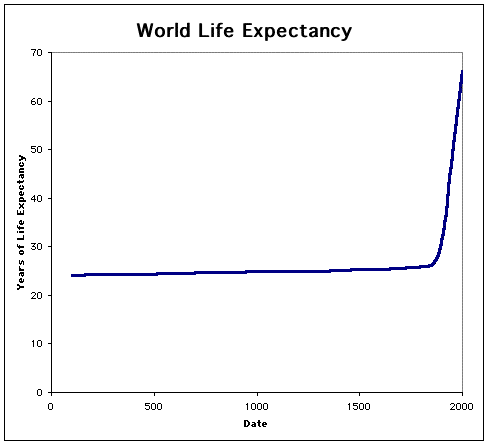
            The reason for the lack of the self-corrective factor previously seen in Orthodox history concerning local bishops behaving badly can be inferred from this graph:

            850,000 of 1,000,000 women having Cesarian operations died prior to around 1900 — not counting the women who died trying to deliver then the Cesarian was attempted to save the baby. Now 20 of 1,000,000 women having Cesarians die. The bishops of those days were mostly all widowers or married; that’s why as Dean writes folk went to them for advice — they knew something of suffering, loss and what it means to be a father and a spouse and not just in metaphorical senses. They had wisdom as well as book knowledge. Now our church is distorted by a rule change in the 400’s that served the church when most died in their 20’s (it prevented the scandal of orphans and widows created by priests remarrying too old). We need to change it back and right soon or no matter how our bishops organize themselves we won’t attract and retain people as they have many church options in the USA.
          3. Geo Michalopulos

            Scott, I have the same only slightly more faith in the laity than I do the bishops. Why do I say this? Because all of the great initiatives (FOCUS,, IOCC, OCMC, etc.) were conceived and executed by the laity. This hurts me to say, but the only institutional initiative that +Iakovos conceived (and which still exists) is a fund-raising one, Leadership 100. Ouch. And he was one of the few bishops who “got it.”

            That being said, let us assume that my faith is misplaced. Where does that leave us? More importantly, where does that leave the bishops? IOW, the capabilities of the bishops and laity are the same? If that’s the case, then we are truly sunk and we might as well fold up our Orthodox tent and go home.

            Unforturnately, unless there is a true spirit of repentance among the ethnic hierarchies, then the only hope is for some group of laymen to simply step in and take over the whole kit and kaboodle and dare Istanbul to excommunicate the American Church. Which is pretty much the historical standard anyway (Constantine I forcing bishops to come to Nicaea and locking the doors until they came up with a decision, St Nikon forcing reforms on the Russian Church, King Otto of Greece declaring autocephaly, etc.)

            It’s sad, but we know that for the last 500 years Istanbul has acted in bad faith. they continue to do so.

          4. Geo Michalopulos

            Harry, this is a little off-topic but tangential. You’re mention of the GOA laity kow-towing to the Democrat Party leads me to solidify my impression of all that is being said by these words: a lack of vision. Now that the Democrats have been reduced to a series of Blue ghettos that are heavily majority/minority Congressional districts, is there any talk in Archon precincts about all the money wasted on the lobbying firm of Manatos and Manatos? These clowns have done nothing but take millions of dollars while tethering the Greek-American voice (dwindling and ineffectual as it is) to the liberal wing of the Democrat Party. What have we Greek-Americans gotten for our efforts vis-a-vis Greek issues (e.g. Cyprus, Greece)? Even the Phanar has only benefitted from the ministrations of the Moscow patriarchate, nothing at all from the Archons.

            Think of it, even if Obama is re-elected (and I believe that as an incumbent president he is the prohibitive favorite), the old New Deal/Great Society paradigm is still deader than a doornail. When Moody’s and Standard & Poors begins downgrading American debt then the Welfare and Social Security checks are going to start arriving later and later each month. The American people will be in a world of hurt. Who is going to give a tinker’s damn about the Phanar, Cyprus, Greece, etc, then?

            Again, the vision thing. Our best and brightest were so awed by Obama’s creased pants (or Giannoulias’ or whichever Dem big-wig) that we couldn’t see that perhaps the smart thing would have been to cultivate conservative voices. The apotheosis of this idiocy was 2 years ago on Greek Independence Day, when the GOA archbishop beclowned himself in the worst dhimmi fashion.

          5. Harry Coin

            George, the church has plenty to do locally, and most smaller cities have elections that are non-partisan because the whole party thing makes little sense in the local context. Like minded ethnic people and coalitions who deem foriegn policy activities in our mutual interest should employ lobbyists to help them. The church should comment on issues, not parties.

          6. Scott Pennington

            Re: Having a local church with standards no higher than GOARCH would be a step backwards for some jurisdictions here.

            “Who has ever suggested this? Why is this the presumption?”

            Dean,

            Why do you have any doubt that this will be the case. The alternative, if there are standardized practices, is that GOARCH assumes the discipline of OCA or ROCOR. That . . . will . . .not . . .happen. Confession is the forgotten mystery in the Greek church. I know, I go to one. A number of other things are similarly lax. GOARCH is the big boy on the block and nothing they don’t want to happen wil happen. It’s not a jump or exaggeration, just hard, cold demographics.

            “I would argue the opposite…WITHOUT a united American church, we will continue to devolve and disintegrate…FROM the true Church INTO the lowest common denominator of what we see around us. Ask yourself, “who allowed these standards in the GOA? A locally elected synod, or the Old World patriarchs? My contention is – ONLY with unity,i.e. locally elected bishops, sitting in synod, will the standards of the traditional church be maintained.”

            No, not a chance in h e double hockey sticks. You may have read the study done by the Patriarch Athenagoros Institute a while back regarding different attitudes toward church rules and general attitudes in the laity. These people favor open communion, et al. I’m serious. If they elect the bishops, things will get worse, not better.

            By the way, things aren’t really “disintegrating” now. ROCOR remains a bastion of tradition. The OCA is not that far apart from them. Unified church with unified rules means the GOARCH bishops get a veto over orthopraxis. Things on that front are definitely better as is.

            You are mistaken regarding Starbucks as well. The only thing keeping ROCOR and the OCA relatively traditional is the clergy, not the laity. I’ve met too many liberal Russians to believe otherwise. A race to the bottom can only be prevented by having tradition minded clergy in charge of making policy. Once the ROCOR/OCA influence were diluted and their authority emasculated by the united synod, all the former jurisdictions would race to the bottom. Not just some.

            “Autocephaly will change none of the “facts on the ground”. What it will change, if we exercise it wisely . . .”

            And what I’m trying to tell you is that the chances of it being exercised wisely are nill in a united church dominated by GOARCH.

            “You cannot expect people at the bottom of an organization to compensate and overcome the buffoons at the top. It just will not happen! The problem is always in the corner office.”

            Yes, and the problem in the corner office cannot be solved at this time. So it is better not to waste time spitting in the wind and get on with the day to day acts of charity and witness that occur at the parish level and constitute the vast bulk of the good work the church does.

            “My point (belabored as it is) is this – only a homegrown system of providing and electing qualified candidates for the episcopacy is EVER going to lead us out of this quagmire.”

            No, it won’t. It may be a good idea for OCA or for ROCOR, maybe not. However, the Greeks are just too liberal and they would dominate the synod and compose the lion’s share of the laity. Greek parishes are, functionally, almost congregationalist; i.e., except for directives on things like priest’s salaries that come down from on high. The standards are set by the members, whether they are clergy or laity. Neither group in GOARCH would improve things much. And the point to keep in mind is that they would be the loudest voice, both clergy and laity, in a unified church.

            “Perhaps more importantly, we will be able to GET RID of the bad ones…witness (once again) Met Herman and Bp Nikolai, versus Abp Spyridon and what is going on in Englewood right now…any questions?”

            A united church, dominated by former GOARCH bishops, is going to have the laity elect bishops. Yes, I have a question: Are you serious?

            All of these things you assume about the character of a unified church are not within the power of the laity to decide and are simply a way of projecting the polity and character of an ideal church onto something you deeply desire, a unified autocephalous American church. And yes, it does sound like a panacea to me.

            However, don’t take these remarks as being intended harshly. I just happen to disagree. I actually pray that things will stay divided until the wheat and chaffe are separated.

          7. Geo Michalopulos

            Scott, I’m sorry, but I just can’t let the analysis you describe go unhallenged. Please understand, in the main, you are correct. But to suppose that a GOA hierarchy untetherered to Istanbul and elected by local American Christians would be as morally lax as they are now is not necessarily the case. Growing up in the GOA, I knew many –possibly hundreds–of Greek-Americans who are alive with a thirst for evangelism. Many GOA priests as well.

            True, in every parish there was a rump faction that was able to obstruct progress and usually they win out. But look at how they are able to accomplish this. Remember, they are stingy in their giving, usually morally questionable, and quite ignorant of even the most basic knowledge of Christianity. So how do they succeed? By pulling the rug out from the zealous priests. How do they do that? By going to the “local” bishop (who usually lives 500 miles away) and raising a ruckus. If they’re desperate to get rid of Fr Zealous-for-Christ, they’ll dig into their bank account and come up with a nice 6-figure sum that they’ve been able to raise because they don’t tithe and are otherwise niggardly in their giving, which he’ll take to finance his latest boondoggle. Or if he’s morally questionable, they’ll threaten to spill the beans on him. Bottom line, the priest packs his bags.

            Now let’s go to the next step: if the majority (or a signifiant percentage) of Greek-Americans are on fire for the Lord, and a goodly number of priests are as well, then why aren’t the bishops similarly motivated? Because they aren’t “our” bishops. They weren’t selected from a pool of ordinary clergymen but as Harry is so fond of saying, but from the subset of “ordained young/never married” careerists. They may have been born in America but in the heart of hearts they are rootless cosmopolites who know more about the best cafes in Istanbul than about the local homeless shelter just down the street from where they live. And let’s not forget, the laity have no say in their selection and the “Holy Eparchial Synod” of the GOA doesn’t either. (Trust me on this, some of the newer bishops were forced upon them by Istanbul. Now of course, the GOA synod has enough of their boys on there to overrule the old guard.)

            As the Greeks are so fond of saying: to psari mirizei apo to kephali (“the fish rots from the head).

            Bottom line: you may be right; the vast majority of GOA parishioners may be just as worldly as the majority of “their” bishops. But what we do know is the present crop (with few exceptions –I think +Isaiah of Denver is the standout) is worldly in every sense of the word.

            I hate dealing in hypotheticals, but it does lead one to wonder what would have happened had Ligonier taken off? Would the present secularist mindset have come to the fore?

          8. Scott Pennington

            George,

            Well, one thing we can agree on, if most Greeks (and others in GOARCH, this isn’t a slam at ethnicity) were as conscientious as you are about these issues, GOARCH would have a very different collective attitude.

  3. Michael Bauman

    Orthodoxy has deteriorated in this country precisely because the Old World Patriarch don’t give a damn about the people here or the Church or anything else except their own existential problems (their own personal ones, not their people who have largely disappeared). They have no vision, because they are dhimmi. Only the Russian Church has any energy and they have to be concerned with what is happening in their own country with their own people.

    I know for a fact that +Basil has a list of the varying practices currently in vogue within various Orthodox Churchs from receiving converts to how non-Orthodox marriage is treated. He will not settle for a watered down morality or overly lax approach (although there are those who will consider him too worldly)

    Whatever we do with it, Dean is correct, without a functional local synod, we are dead. The Church will go on somewhere, but it won’t be in the U.S.

    Even with a functioning local synod there will be those who consider themselves to the the one and only true and genuine Orthodox Orthodox Church.

    The question is what will +Basil and others of like mind do if they are stonewalled, and the result is a distorted, twisted slouch of a Church?

    Still think there is going to be an official Orthodox Church and an un-official one. Which will be the Church? That is the the question isn’t it.

  4. Andrew

    Are there people who profit from Orthodox dis-unity in America? You bet there are and this is the elephant in the room nobody really wants to talk about. Despite all the platitudes there is today a professional class of sinecure staffers who are highly paid and resistant to any talk of unity that will compromise their gravy train. Think of all the highly paid chancellors, ecumenical officers, directors of ministry, titular hierarchs, and other Church officers and patronage positions out there who have lifestyles that are significantly better than the average pastor and person in the pews. You think these folks are going to embrace unity if it means a cut in their lifestyle? No way. These folks have it good and they are not going to give it up. Likewise, no bishop is going to compromise his six-figure suburban lifestyle to go somewhere poor and challenging to minister for the sake of american orthodox unity.

    Today, there is a select professional class of Orthodox leaders who profit from the status quo of disunity and confusion. They live very well. This professional class shapes opinion and has direct access to hierarchs across the country. This professional bureaucracy is a highly paid welfare program with a three-bar cross. The hard work and stewardship of many Orthodox Christians funds this welfare bureaucracy. Any attempt to dismantle this is going to be met with resistance. Meanwhile, the costs of maintaining this bureaucracy will continue to skyrocket while risking the solvency of jurisdictions.

    We can have no real episcopal assembly or talk of Orthodoxy unity in America until we confront the bureaucracy that profits off of Orthodox dis-unity in America. St. Benedict of Nursia was right when he said “Pruned. It Grows”

  5. Ron Muresan

    My friends,

    We are no less “mature” than our Orthodox fellows in Greece, Romania, Russia. Here, we are deformed, by a gestation period that’s gone on too long. Like any gestation (or conflict) that is strung out, left to hang fire, like a bread left too long in the oven. Burning, on our way to useless crispiness that if it’s not saved, will only be fit for a bin somewhere.

    Plus, as an informed, thoughtful Antiochian friend has said, “We live in the fantasy that we are an Orthodox country,” which has resulted in screwed-up finances, lavish clerical visits based on posturing, pretensions and strutting discussing “mutual problems” and “the meaning of ‘Icon’ in the Orthodox Church” rather than on Modesty, Thrift, and Focus on living The Thankful Life, letting Our Little Light Shine, which lets our clergy live the Joyous Life they entered Seminary with!

    Sorry my article pre-supposes this goodness of life, the sweet modesty of a wholesome, pious laity that feels empowered and respected by a joyous, fulfilled hierarchy and clergy. Because their shortcomings, like ours, are the direct result of our deformity of church life. It is precisely the century-old “slow walk” that has distorted and deformed our Orthodoxy in America. That has confused some people into mistaking hoped-for Orthodox senior-care foundations, orphanages, hospitals, colleges as “neo-protestant.” Into NOT stinging with shame at 3 ethnic parishes built on THE SAME CITY BLOCK.

    We for sure don’t need, and can’t finance, 55 bishops in America. At least not until we are autocephalous. Freed of having to live vicariously the COMBINED problems facing Russia, Greece, Istanbul, Romania, Serbia, etc. Back in the 50s, 60s, 70s, we still retained our primordial Orthodoxy, the strength that our Orthodox immigrant parents brought with them.

    But like a ballroom that feuding clans are fighting over, cobwebs gather, the windows darken, the roof caves in. Because nothing is going to be settled, no house put in order, that’s run from across the ocean by men who don’t live in my world, face my problems, know my joys. Men who feel entitled to withhold their blessings from time-tested, home-grown American solutions to American problems.

    Let the Patriarch of Constantinople apply his solutions to the Greeks – they won’t have him. Let the Patriarch of Russia apply his to the Ukrainians – who don’t want him.

    Only when we study, internalize and implement the reasons underlying the Holy Canons will Orthodoxy thrive in America. Because what underlies them is The Holy Spirit. “For The Lord is That Spirit, and where The Lord is, there is Liberty.” The Lord will give us not only the freedom to craft the necessary solutions to our American dilemma, He will grant us the perception, vision, and wisdom. Us – the sacerdotal priesthood and the royal priesthood, collectively.

    Sorry for the long reply, but I ached with dread at some of your posts. Keep one thing foremost in your minds – your conclusions and “estimations” about your/our hierarchy are themselves short-sighted, themselves the result of “The Slow Walk.” Our hierarchs are, collectively, the most capable, insightful, holiest of men – BUT THEY HAVE BEEN JUST AS BLOCKED AS WE HAVE BEEN. Because “they” are “us.” Blocked from their normal work, of being productive and fruitful, they have been distorted into committing acts which we could criticize, were we worthy!

    THAT is why I wrote my “Spinning” article, to urge them to step out of the shadows to which they have been consigned.

    Freed from that captivity that their forebears courageously evaded in 19th-20-th century churches, they will be free to work with their royal priesthood “toward a more glorious Orthodoxy in North America.” (the words of my late, blessed Archbishop +Valerian Trifa.)

    Ron

    1. Nick Katich

      “Our hierarchs are, collectively, the most capable, insightful, holiest of men – BUT THEY HAVE BEEN JUST AS BLOCKED AS WE HAVE BEEN. Because “they” are “us.” Blocked from their normal work, of being productive and fruitful, they have been distorted into committing acts which we could criticize, were we worthy!”

      Ron: Let’s not delude ourselves. Except for your Archbishop and those other bishops in the OCA and in the Antiochian Archdiocese, the rest are as emotionally attached to their mother patriarchates and their phyletistic jingoism as the old world synods they serve. I hardly know of any bishops in the ethnic jurisdictions that would vote to cut the old world umbilical cord if they were given the opportunity to express themselves by secret ballot. It is not the old world patriarchs that are blocking them from their normal work. They are blocking themselves.

    2. Geo Michalopulos

      Ron, an excellent summation. However, I feel that I must disagree withyour statement that “we can’t afford 55 bishops in the US.” We already have 55 bishops in the US, it’s just their allocation is caterwampus: 7 in Chicago, 8(?) in NY, 3 in SF, 2 in Detroit, 2 in LA, etc. And let’s take a look at episcopal salaries and pensions. If these men are monks (and I mean real monks) then six-figure salaries are completely out of the question. Otherwise, I would have no problem at all with such high salaries if we were looking at ordaining senior married clergy as bishops.

  6. I don’t want to step unprepared into this ring, but hey, I’ll take a shot at adding to the conversation at the risk of being declared off-topic; as a recent college graduate and OCF member, maybe I can speak a tiny bit about how I have experienced this “unity concept” amongst Orthodox youth. Maybe some of what I say can be tied into the question of heading our own Church of America.

    My own bias, first of all, comes from my being Greek Orthodox, raised in a parish that seems to be crumpling from few signs of new life. I have gone to Liturgy almost every week of my life, and until freshmen year of college, I did not understand that as a Greek Orthodox parishioner, I could receive Communion in another Orthodox jurisdiction (“Other jurisdictions? Huh?”). Thanks to OCF, I was brought into a new world, one where I could feel comfortable telling somebody that I am Orthodox–not just “Greek Orthodox” (*note to OCN: listening to recordings talk about the “Greek Orthodox Faith” is kind of annoying for a Pan-Orthodox ministry).

    Throughout college, I have been surrounded by Orthodox students of various traditions, from Albanian and Georgian, to Ukrainian and Russian, to Presbyterian and Roman Catholic. We each have our own history and experience, but we are all comfortable with being in OCF because we recognize our Faith in each other. Some of us might look with some disapproval at a church organ, and others might stare in uncertain fright at a full prostration, but we do not evaluate each other or the parishes we visit (15 out of 29 in Cleveland so far) based on these things. When we exchange a kiss of piece at an OCA parish, it does not cause us to believe we are betraying our own traditions of only letting the clergy do so. When we sing Doamne miluieşte during the litany of the catechumens in a Romanian parish, we do not mock a possibly unnecessary litany. My point is that we are okay with just being Orthodox; in fact, we are more than okay with it–we love it in all of its expressions as long as it is Truth.

    I would limit this to my own chapter and our understanding of Orthodoxy, except I have seen it on a larger level, as well. At OCF’s College Conference East this past December, we had a large discussion about “what we think needs to change concerning the Church in North America”, and instead of criticism of internal heresies of fundamentalists or ecumenism or something like that, I heard responses in unity. Attendance needs to improve and people should strive not to be late or leave whenever they feel like it. Pan-Orthodox events should be more frequent. Money should be appropriated to parishes as is needed, regardless of jurisdiction. English (or Spanish or French where necessary) needs to be the predominant language of the services (other languages obviously need not be eradicated). Sunday School should not cut children out of services. Orthodox ministries should get more attention and support. In fact, the one thing that was not fully agreed upon in the slew of issues brought up was whether or not women should be allowed to serve in the altar (comments stemmed from *the role of women already being strong and a blessing in the Church* to *the perspective-shift of the girls that participated in the Lamentations of Great and Holy Friday as Myrrh Bearers*). Regardless, we spoke openly (no “adults” in the room except for those of us 21- and 22 year-olds), and we all participated and found common points of understanding.

    For many of us, what was satisfactory about our conversation was that none of us assumed to be wiser than our heirarchs, we agreed on almost everything, and if there was more than one opinion, we critically discussed it. We heard each other and listened, and we responded. Even in agreement, we often discussed. One of the things that is annoying when looking at the EA is that it is so pseudo-secretive or seems to lack actual discussion. We know that the numerous committees now listed online are set to discuss specific things and that much research goes into all this, just like with the Pre-Concilior meetings from decades ago, but as the laity, we see no discussion about the issues at all. Reflections from various bishops on the EA seem to merely confirm that the EA exists and does have some goals (outlined over and over again in the constant quoting of the writing of Chambesy), and that the Great and Holy Council will convene as soon as 2011/2013/2020/2050/2375. However, even if we don’t have answers now, even if there is a major disagreement with good reason, I think it would be helpful to know that things are at least being discussed (even if it is during one meeting at Pentecost each year)! The pages and pages that fill our books on Orthodoxy outline why we do what we do and think what we think, and how it all developed to become the Church that exists today. There are not just free and automatic answers; there are the prerequisite argumentation for different sides or opinions.

    I personally almost feel like the EA is afraid of the controversy that is essentially the root of its existence. If we were all exactly the same, proclaiming Autocephaly would be a cinch. But we are not the same–and probably for some historically and theologically strong reasons. Is our politically-correct culture preventing us from being open with each other inside the Church, even if it is civilized and spoken in a search for Truth? Will the bishops hate each other if they disagree, especially if they clearly know they disagree on various different issues? I would hope and think not. Do some or all of the Heirarchs think they are fighting for their side to win the war on practice and administration, even if it could be wrong for the fullness of the God-willing imminent Church of America? Are the laity behind this feeling (“Ha, take that other jurisdictions! Now prepare to bring RC’s into the Church with another baptism as WE have always held to be meet and right!” or “Yes, they translated the Symbol of Faith with ‘who *spoke* by the prophets’–I was worried it would be ‘spake’”)? I doubt that *most* of the laity are that involved to care (some studies reflect I could be right, and that’s bad), but I bet that there will probably be some that are more than willing to answer a unified Church with a schism, God forbid.

    Now, I know that as youngsters, we live in a dreamworld where we think that everything is possible, and where we don’t recognize the full role politics and money and such play in the process of a truly united Church–but I think we would point out to anyone that actually has that opinion that Christ’s perspective may not be so, so different in that realm. We are not the whole youth of the Church (surely, there are plenty of Orthodox students not involved in OCF, too tied to being Arabic or Greek or whatever, not Orthodox YET, or have no idea what’s going on in the wider view of the Church–divine ignorance for some, perhaps), but I would say that we and those young souls in American Orthodox seminaries are the future leaders of the Church. I can only pray that we aren’t going to be too corrupted by the “power” of priesthood, a position on a diocesan committee, or a spot on the parish council, but history does not show the future to bode well. Still, I am genuinely happy with most of what I have seen in OCF students, and I think the Church should be, too. I wish I would have even heard OCF existed before I went to college, because I am sure I already would have been, as well.

    Bottom line: Orthodox youth leaders seem to want to be united, and are in favor of autocephaly if that will help accomplish this unity; we would love to be serious about the EA, but we don’t really know that much about it yet.

    1. Nick Katich

      Excellent and thoughtful comments, Peter.

    2. Dean Calvert

      Peter,

      I’d love to repost this on the Orthodox Episcopal Assembly Facebook page (operated by St Andrew House).

      would you mind?

      Best Regards
      dean calvert

      1. Sure, that’s fine with me.

        And thank you for editing my lack of italicizing a foreign language and my various misspellings, Fr. Johannes, if that was you. Clearly, spell-check has impacted my generation in a not-so-good way.

        1. Fr. Johannes Jacobse

          Yes, that was me. Let me throw my hat in the kudos ring, Peter. This is a fine piece of work.

  7. Andrew

    Folks here know I have no tolerance for Phanariot or 79th Shenanigans. However a broken clock is right twice a day so when something good pops up from these folks I feel the need to point it out and encourage it. To this end, I would like to praise Archbishop Demetrios’ encyclical for the Feast of the Three Holy Hierarchs.

    Here it is:

    Protocol 09/11

    January 30, 2011
    Feast of the Three Hierarchs and Greek Letters Day


    For this reason we also…do not cease to pray for you, and to ask that you may be filled with the knowledge of His will in all wisdom and spiritual understanding; that you may walk worthy of the Lord, fully pleasing Him, being fruitful in every good work and increasing in the knowledge of God…. (Colossians 1:9-10)

    To the Most Reverend Hierarchs, the Reverend Priests and Deacons, the Monks and Nuns, the Presidents and Members of the Parish Councils of the Greek Orthodox Communities, the Distinguished Archons of the Ecumenical Patriarchate, the Day, Afternoon, and Church Schools, the Philoptochos Sisterhoods, the Youth, the Hellenic Organizations, and the entire Greek Orthodox Family in America

    Beloved Brothers and Sisters in Christ,

    On this commemoration of the Three Great Hierarchs and Ecumenical Teachers, Basil the Great, Gregory the Theologian, and John Chrysostom, it is fitting as Orthodox Christians that we gather in our churches in thanksgiving to God for the blessings we receive through the witness and guidance of these Saints. It is also fitting that we join with this commemoration our annual observance of Greek Letters Day.

    These Holy Fathers were men of great learning, admirers of the beauty and purpose of language, and artisans of the written and spoken word. They also knew the value and role of education and knowledge in the development of human potential and the cultivation of the soul.

    For the Three Hierarchs the acquisition of knowledge was not an end in itself. Certainly, they affirmed that careful study, discipline of the mind, and intellectual engagement with ideas and phenomena were essential uses of human ability. But they also, as men of God, emphasized the relationship of knowledge to faith. In addressing the question of which comes first, Saint Basil wrote, “I reply that in the case of disciples, faith precedes knowledge. But in our teaching, if any one asserts knowledge to come before faith, I make no objection.” (Letter 235) For Saint Basil, knowledge that precedes faith leads to God. Knowledge that embraces the idea of God, which perceives “His wisdom, His goodness,” leads to an acceptance of God as our Creator. He states, “This knowledge is followed by faith, and this faith by worship.”

    For Saint Gregory the relationship of knowledge and faith is also related to our knowledge of God, or more specifically, to what we know and what we cannot know about Him. Saint Gregory states that God is “limitless and unbounded, transcending all conception of time and nature,” and only “dimly and scantily” grasped by the mind. However, he states that this limited knowledge of the incomprehensible leads to wonder, “and as an object of wonder to become more an object of desire; and being desired, to purify; and purifying to make us like God; so that, when we have become like Himself, God may, to use a bold expression, hold converse with us as God, being united to us and known by us. (Second Oration on Pascha) Thus, the knowledge that much about God is beyond our comprehension leads us to greater faith in Him and to a deeper communion with Him.

    Saint John Chrysostom addresses knowledge in a similar way in his homily on Colossians 1:9-10. In his exposition of this letter of Saint Paul, Chrysostom states that “to be in error” is “not to know God as one ought.” (Homily II on Colossians) Thus, true knowledge is knowing the will of God and living in a manner which increases the knowledge of God. He also affirms that to know God, a person must know and believe in Christ, the Son of God who has revealed the Father and His love for us.

    The relationship of knowledge and faith is essential to the meaning and purpose of our lives in our contemporary world. While we live in a world filled with information and means for acquiring and storing more and more knowledge, we can also say that we live in a world where many are spiritually illiterate, having no or very limited knowledge of God. This reality accentuates the uniqueness of our celebration. On this day of the Three Hierarchs and Greek Letters, we combine an emphasis upon learning, intellectual growth, language, music, art, and many other areas of knowledge with the truth of our faith. We affirm that knowledge and faith are not exclusive, but, as seen in the lives and teachings of Saint John Chrysostom, Saint Basil and Saint Gregory, are very interrelated in both our abilities and existence, and ultimately in our relationship with God. We also recognize that knowledge of God is the foundation, standard, and goal of all knowledge. When we know God we understand the value of the knowledge we have about all that He has made. In our relationship with God we find the wisdom and discernment to use knowledge in ways that sustain life and well-being. We also realize that knowledge both leads us to faith and strengthens our faith in Him.

    This understanding of the relationship of faith and knowledge is a truth that we are called to experience and offer to others. It is an understanding of life and being that should characterize our engagement with our world and those around us. It is a truth that should guide our efforts to nurture our children and youth so that they are spiritually and intellectually prepared for a successful life firmly rooted in the knowledge of God. It is an understanding that should lead each of us to seek His will and a greater knowledge of His truth through prayer, worship, and study of our Orthodox faith.

    On this day may we give thanks to God for the beautiful and rich witness of faith offered to us by the Three Hierarchs. May we also affirm our commitment to continue this witness through our cherished Greek heritage of learning and knowledge which ultimately leads us to the knowledge of communion with Him.

    With paternal love in Christ,

    DEMETRIOS
    Archbishop of America

    http://www.goarch.org/news/threehirarchsencyclical2011

    Its a solid letter, well written and reasoned. It established a broad outreach and lacks the ugly omogenia references and ethnic snobbishness we see elsewhere in the GOA. The letter also offers broad based pastoral concern and places an solid emphasis on the formation of culture. Its also lacks the ecclesiastical triumphalism we see often with the EP and the GOA (Remember +Demetrios’ DNA Comment?)

    There are still huge problems but I would just like to say hank you to whoever helped craft this message and get it out. We sure need more of it.

    1. Fr. Johannes Jacobse

      Don’t you wish they applied it to, say, bioethics, science, history, and such? They would come out with a coherent statement on the value of uborn life, give up on secular apocalyptic scenarios like global warming, take the religious education of the laity with more seriousness, stop the shameless feting of politicians, eliminate the historically illegitimate bifurcation of Hellenism and Orthodoxy…

      You’re right though. Lots of wisdom here for anyone who wants to take it.

  8. Michael Bauman

    Fr. Hans, you mean be bishops instead of dhimmi satraps?

  9. Fr. Johannes Jacobse

    Well, I would probably soften it a bit. I wish their focus was on the spiritual needs of their people.

  10. Noah J

    *warning* – 1st time commenter and not the brightest bulb of the bunch –

    This article both intrigued and bothered me. On the one hand agree that the Church in States needs to operate as an independent and unified body but I do not think we should do so with by turning our back to “Old World”. As a fellow young adult and GOA member I greatly appreciate Peter’s comments to this article. Unity is not something that young Orthodox Americans understand in a political way; it’s simply the life we experience in OCF events, pan-Orthodox retreats, book clubs, etc. Converts, cradles, Greek, Russian, Arab, whatever! We’re just trying to love Christ and make our way in this broken economy and this sinful age. I think the more senior members of our Church really need to take a serious look at the youth movement in American Orthodoxy. We’re not so caught up in cultural distinctions (I’m a black man in a Greek church with no problems) and we have the energy to sustain the idealistic dreams of unity and autocephaly.

    I think it’s also important to approach the issue of disunity with a historical perspective as Scott has. As a slavophile I resonate his point about the Russian Church- it didn’t receive autocephalus status for 400 years after receiving the faith! Yet the Russian Church was filled with great saints, martyrs, and teachers of the faith way before it became autonomous; and its society had already been thoroughly transformed by the Gospel. The external declaration of autocephaly meant very little then and even less now if we do not live as a unified body, proclaiming the Kingdom within our own local areas. If each parish loves the ones near by, recognizing their shared faith and communion, then unity cannot but be recognized. Let’s strive for unity in deed and not in name alone.

    And as for the true moral/praxis shortcomings of certain parishes we have beautiful instructions from St. Paul about such matters “Brethren, if a man be overtaken in fault, you who are spiritual, restore such a one in the spirit of meekness; considering yourself lest you also be tempted.” Our conversations about unity would be enhanced if we approached one another in this spirit. It slightly shakes my young weak faith when I read/hear people speaking so candidly about the shortcomings of my jurisdiction. A lot of prejudice and unnecessary offense can flow from condemning entire canonical jurisdictions. The early church was filled with inconsistency, contention, and outright sinfulness but the same Holy Spirit that guided the Church through those times lives in our parishes today and by His grace we should be able to lift one another up rather than drag each other down. Parishes, bishops, priests, and laity who fall into error need the humble and loving encouragement of the more spiritual of their counterparts.

    also: Am I wrong to read a measure of disdain in peoples’ use of the phrase “Old World”?

    In Christ,
    Noah

    1. Nick Katich

      Noah: Referencing “Old World” is not “disdain”. It is in juxtaposition to their “disdain” in referencing us as “Diaspora”. However, it does, in some respect, suggest a necrotic heart-hardening on the part of some across the sea.

    2. I agree with you, Noah; you have spoken very well. I’ve often pondered the concept of judgment within the Church rather than judgment of outsiders that Saint Paul discusses. Looking back, my comment sounded very much like a rant, and I apologize for that. I agree that we must find a way of spiritually guiding each other, but we face the challenge of stubborness on all sides. Maybe this stubborness is a good thing, but only if it is out of sincerety and to uphold the Gospel, not for fear of being wrong. The history of Orthodoxy has shown many Christians to be opponents within the walls of the Church, not because one person was heretical, but in a sense, because both were. If heresy is “picking and choosing” parts of the Faith rather than the catholicity of it, then I feel like we even have Saints that have overemphasized one teaching to the point of losing full meaning. One beauty of the Tradition of our Church is simply how deep it all is. Every parable, every liturgical movement, every icon can point us to Christ in so many ways without contradiction. Unfortunately, I feel like we often create a false contradiction ourselves when one may not exist–and this requires understanding and forgiveness. From all the harshness that eventually shows itself if and when we become united in practice, I think one of the greatest things each community of local and truly sister parishes can do is celebrate the Forgiveness Vespers. Let the icon of Saints Peter and Paul embracing be an image of our united Church.

    3. Ron Muresan

      Hi Noah,

      If disdain abides in the “Old World – New World” scenario, it runs in but one direction, from Old toward the New.
      We Americans are not the ones locking the Phanar bishops out of the voting, it is the “universally recognized” Patriarchates locking out
      America, Ukraine and other “inconvenient” groupings (I avoid the term “jurisdiction” as inapposite).
      Even Arius & other heretics were admitted to the Ecumenical Councils, were afforded the right to present their viewpoints publicly, even to vote on their own anathematization. Imagine being on your own jury! Orthodoxy used to constitute Due Process PLUS!
      I know disdain when I see it, and the disdain runs from THERE to HERE.
      It was disdain that summarily forced Archbishop +Iakovos into retirement after Ligonier.
      It was disdain that saw the Phanar forcing an unwanted Constitution rendering the GOA a captive church, its bishops “serving at pleasure.”

      The point of my article, if I were forced to “nutshell” it, is that we DO HAVE an American Orthodox Church today, but being historically constrained, it finds itself malformed, because (unlike Russia), the Mother Churches are herding/ constraining it (us) into activities divorced from our life here in America.
      Our church life, our collective attention, is burdened with the issues of Hellenes, Phanariots, Syrians, past Russian colonization of Ukraine/ Bucovina/ Transnistria/ Baltic states + Russia’s working out its post-communist life; of Romanian post-cold-war politics, etc. etc.Being themselves restricted to ceremonial activity (unlike Greece, Romania, Serbia), our bishops’ lavish receptions and foreign “good-will” junkets lay waste to diocesan finances, and worse, we must resign ourselves to our paucity of charitable institutions, our sub-engagement from American public life.

      Two questions stand out in my mind –
      WHY are we Americans as a group more fixated on Turkish citizenship for Greek-American bishops than on planning national chains of wholesome Orthodox orphanages and senior centers?
      WHY couldn’t our Episcopal Assembly have walked into NYC 2010 with committee assignments already settled & hit the ground running?

      You know, in 1963, the bishops had to be hoodwinked and dragged along by the then-lay leaders of CEOYLA (Council of Eastern Orthodox Youth Leaders of the Americas), into attending a National Orthodox Festival in Pittsburgh’s then-spanking new Mellon Arena. Over 10,000 faithful attended (the financial statements imply over 11,000) and the combined choir totalled nearly A THOUSAND VOICES. Another CEOYLA Festival was held in 1977 despite behind-the-scenes maneuvering by some hierarchs. Not so the failed 1983 Journey to Pentecost, which was rubbed out of existence by “scheduling conflicts.”

      One would think that the Episcopal Assembly agenda for Spring, 2011, should include a 50th ANNIVERSARY WEEK OF ORTHODOXY, perhaps in Chicago including a Divine Liturgy (rivalries left CEOYLA having to settle for Vespers only), as part of a week-long National Orthodox Congress, where the faithful could be included in brain-storming, in identifying priorities and funding solutions, and pray together.
      Of course, the hierarchs won’t go for that because it might break out into an out-of-control Festival for Autocephaly. And for them, removal by their overseas overseers.

      Our disunity has created duplication, duplicity, making Orthodoxy a fantasy-world organization where 4 Orthodox kids who live on the same street attend 4 different Orthodox churches – and we avert our eyes, denying that it is a scandal, insisting that “Orthodoxy is One.”

      The Episcopal Assembly cannot continue to tolerate such a monstrosity. But to do otherwise risks dismissal/ removal by the Old World Patriarchates.
      If that constitutes disdain, I repeat – disdain from which camp?

      God help us, and God open the hearts of the Episcopal Assembly, where legitimate authority lies.

      Ron Muresan

    4. Michael Bauman

      Noah, really good and hopeful insights. In one sense it reminds me of the words of Met. Joseph, the Patriarchal Bulgarian Met here in the US. After Ligoner fell apart he stated that all of the participants in Ligoner would have to die before any unity occured. He was likening it to what happened to the Nation of Israel when it refused to go into the promised land and had to spend another generation in the wilderness before it was allowed to enter.

      Perhaps a Joshua will be raised up from amongst you.

      On the historical development side however, Russia did not have the prospect of a plethora of dhimmi weakened churches fighting to avoid real evangelization. Russia was actually evangelized by a strong, vibrant mother church.

      The United States has had little actual evangelisitc activity in her. The initial Russian effort in Alaska was decimated by the U.S. Governement sponsored Protestant oppression of the Native Alaskans as were the people. The Soviet Revolution in Russia dealt a real blow to any effort in the lower 48. While we may bridle at the term diaspora applied to us today, the late 19th and early 20th century showed we really were much more like a dispora than anything else. The Patriarchates have just kept treating us that way.

      They have not been in a position to develop a missionary vision for the US. They have been too busy just trying to survive Isalm. The Islamic attack on Christians in Turkey, Iraq, Egypt and even in Jerusalem with Israeli help continues to this day. The founders of my home parish were literally driven from their Syrian homeland by Islamic pograms that left many of their family dead and them disposessed.

      Despite that, they established churchs at great personal sacrifice so that the faith would continue. Many times they had little to feed themselves and their familes, yet they built churches. They had to work long, long hours to earn what little they did earn, yet they had time to attend worship when the traveling priest came through, to have their children baptized and their marriages blessed. They were literally spit on in the streets, called dispicable names and shuned in many other ways, yet the built churches and became an integrated, respected part of the community.

      Russia had a unified, missionary effort that created the Church there and an absolute monarch to inforce the enculturation (forced baptisms BTW and a residue of superstition that led to ‘monks’ like Rasputin and use of icons as magic talismans in many of the villages not to mention the suppression of the Church to the will of the state from Peter, the-not-so-great on). The Church here was sprinkled in disperate pieces onto this land–a land with a strong, establish Christian-based culture that is still somewhat xenophobic. It is up to us to, by the grace of God, to put the puzzle together in a God pleasing manner so that we can actually evangelize our own land from within. This approach is in perfect accord with the character of our country and the people here even as it is quite strange. We may never be ‘dominant’ here as we were in Russia (although I think the actual dominance in Russia is overstated). Our influence is likely to be more indirect.

      I also think we have more saints formed here than is evident at this point, householder saints like Matuska Olga are, IMO, more likely to be the norm here in the US rather than the great asthetic athletes of the past.

      It would work more easily if we had the blessing of our various mother churches, but the work of the Holy Spirit will not be thwarted forever. We will go into the promised land or we will be scattered.

      Thank you for your perspective and sharing it.

    5. Eliot Ryan

      Noah

      It slightly shakes my young weak faith when I read/hear people speaking so candidly about the shortcomings of my jurisdiction.

      You are doing excellent! Your faith might be “young and weak” but it is a healthy faith.
      Greek Orthodox Churches have always services on weekdays feasts. The Greeks also have Easter midnight service, while the others prefer to have it at 8 in the evening. For many it is more important to stay up till midnight on New Years eve. The Resurrection feast is not worthy of such sacrifice. If we keep innovating, the Church will slowly become one more secular activity. The “old world” preserved and handed down to us the Orthodoxy which is Life. Honoring our predecessors means to honor the life that has been given to us.

      Without the “old world” and a continuous contact with it, Orthodoxy would soon be overcomed by the subtleties of the American culture “that shapes our perception of the world and God’s place within it”.
      Please see: Sloshing Our Way into the Kingdom By Father Stephen. I is brilliant!

      When my friend told me the story, I asked him if he understood what had happened. “We Americans sprinkle water as though we’re afraid to get wet. The Russians “slosh” the water as though they are getting blessed!”
      […]
      The rejection of relics and icons, the desacralization of sacraments renders our modern world “safe” from a concrete encounter with the sacred. We prefer our encounters to be polite sprinkles, marked with ambiguity and never free of doubt.

    6. Dean Calvert

      Dear Noah,

      First, let me be honest and tell you – I love your comment: “…we have the energy to sustain the idealistic dreams of unity and autocephaly.” God bless you, and know that you will need it!

      Second, as an amateur historian, let me add a little perspective to your comment about the Russian Church, as one who has gone back and read much of the original historical record. First, despite the differences which are obvious, I believe there are MANY parallels between the American Church and the Russian Church. Having grown up in the GOA, I was astonished to read many letters and commentaries, written in the 12th thru 15th centuries, which describe an ecclesiastical situation in Russia of the Middle Ages which was not unlike the modern day US – i.e., an Old World patriarchate (Constantinople) attempting to rein in and control the young upstart “daughter church” (Kiev, then Moscow), using many of the same tactics used by the ecumenical patriarchate on the US church today (insisting on Byzantine appointed metropolitans, setting up separate eparchies, playing princes off against one another, while attempting to solicit funds at the same time it was Russian money that rebuilt Hagia Sophia following a devastating earthquake in the 1300’s). The stress of the relationship between the two churches is easily recognizable if you read through the letters between the EP and the Russian princes and metropolitans – many of which can be found in Obolensky’s spectacular work “The Byzantine Commonwealth.” There is even one comical story told, I believe it was called “the false Anthony” where the Byzantine emperor took a bribe from the Russian Grand Prince,in exchange for appointing a Slavophile metropolitan (who the Grand prince had apparently never met). On the trip to Kiev, the candidate died. The Greeks got together, having spent the money already, and elected one of their own to impersonate the favored candidate, who was enthroned as metropolitan of Kiev!

      In any case, with regard to your comment “I think it’s also important to approach the issue of disunity with a historical perspective as Scott has. As a slavophile I resonate his point about the Russian Church- it didn’t receive autocephalus status for 400 years after receiving the faith!”, let’s not get carried away (bamboozled is more the word springing to mind) with the “400 years.” Go and take a look at Bulgaria, which was declared an “autocephalous archbishopric” by the Byzantines only 80 or 90 years after having received the faith. A close examination of the historical record, with regard to autocephaly will reveal that the autocephaly is generally “taken”, not granted by the Mother Church (the exceptions are Serbia and Albania i believe). Perhaps more importantly, our history is filled with examples of changes in ecclesiastical governance which more aptly describe a living organism than the kind of static situation we in America have come to believe exists. Examples of this include autocephalies granted in Serbia and Bulgaria during the Middle Ages (twice in the case of the Bulgarians), the rescinding of those autocephalies following the Ottoman conquest, only to have those churches once again declare autocephaly following the wars of independence. Similarly, the churches of Ravenna and Trebizond (the empire of the Grand Comneni) were actually granted autonomy at various periods, only to have those effectively rescinded at following the conquest of those areas by non Orthodox.

      The real point here, keeping in mind your “keeping a historical perspective” is that the borders of the nation the Church grew up in (the Eastern Roman Empire) were fluid and dynamic – reaching to the Euphrates one day, and only the walls of Constantinople the next. The Church, as a living organism, periodically, but methodically, reviewed those changes and adapted to them, as any living organism does. Metropolitan Philip, for all his failings, was absolutely correct when he stated, “The church was never intended to be fossilized in the 10th century.” The truth is, it is more fossilized now than it EVER was in the 10th century (the age of Sts Cyril and Methodios and St. Photios!)

      Just a few random thoughts to add to you excellent analysis!

      Best Regards,
      Dean

    7. Noah, welcome to the blog! We need and value your insights! If I may quibble on just one point: yes the Metropolitinate of Kiev was under Constantinople for about 400 years but its de facto independence as to how it orderred its interior church life was never called into question. Even though most of its metropolitans were appointed by C’pole, its bishops were locally elected. And let us not forget, the moral vision of the mother church was identical to its daughter. Given that there is absolutely no mention about abortion on their website but scads and scads about Canon 28 and global warming, can we say the same thing about Istanbul today?

      Think of it: the list of honorables about the early grace-filled days of the Church in Russia which you describe bears absolutely no resemblance to what has transpired in any of the eparchies which exist in America (not just the GOA). Let us for the sake of argument include the OCA and ROCOR in this mix. The question is “why?” Is it possible that the incessant meddling of foreign patriarchates whose main concern is vacuuming as much money as possible from their embassies plays a major role in this?

      Like Dean, I’m under no illusion that the formal and loving unifcation of an independent American church is going to a panacaea. It is not. But the present state of affairs is an affront to the Holy Spirit and He will leave if he sees that we are not serious. The form of religion will exist but the grace of the Holy Spirit will go elsewhere.

  11. Scott Pennington

    Noah,

    Nice comments. I disagree somewhat with you on the importance of orthopraxis. St. Paul whom you quote specifically commanded women to cover their heads in church and this was the practice, regardless of culture, for a very long time.

    Nonetheless, it is important not to get too bent out of shape by such things.

    Dean,

    My point regarding the period of time it took Russia to get autocephaly was not that it was a long time in years. My point was that the country was largely “Orthodoxized” when it took, and then was granted, autocephaly.

  12. Andrew

    Please note the phrase “permanent president”. It would also be interesting to run the names of his fellow committee members and see want pops up.

    President Obama Appoints Demetrios to Advisory Board

    February 6, 2011 by Greek News http://www.greeknewsonline.com

    Washington – President Barack Obama announced on Friday his intent to appoint a group of distinguished individuals, among them Archbishop Demetrios of America, to the President’s Advisory Council on Faith-Based and Neighborhood Partnerships. The Advisory Council will be chaired by Susan K. Stern. The following members will also participate:

    Leith Anderson, Andrea Bazán, Angela Glover Blackwell, Brian Gallagher, Bishop Mark Hanson, Lynn Hybels, Member, The Most Rev. Dr. Katharine Jefferts Schori, Rabbi Julie Schonfeld, Archbishop Demetrios Trakatellis, Sister Marlene Weisenbeck, Reverend Elder Nancy L. Wilson.

    The President’s Advisory Council on Faith-Based and Neighborhood Partnerships brings together religious and secular leaders as well as scholars and experts in fields related to the work of faith-based and neighborhood organizations in order to make recommendations to the government on how to improve partnerships. The President will announce additional members to this Council at a later date.

    President Obama said, “I am pleased to announce that these experienced and committed individuals have agreed to join this Administration, and I look forward to working with them in the months and years ahead.”

    A short bio of Archbishop Demetrios that is included in the announcement states:

    Archbishop Demetrios Trakatellis is currently the Archbishop of the Greek Orthodox Church of America, the Exarch (plenipotentiary representative) of the Ecumenical Patriarchate of Constantinople in the U.S.A., and the permanent President of the Assembly of 65 canonical Orthodox Bishops in North and Central America. In 1999, Archbishop Demetrios was elected by the Ecumenical Patriarchate to lead the Greek Orthodox Church in the United States. He is the spiritual leader of more than 1.5 million Greek Orthodox faithful in the United States and holds leadership and advisory positions in organizations which promote dialogue and reconciliation (emphasis added).

    Additionally, Archbishop Demetrios is active in interfaith and intercultural dialogues, in religious freedom and human rights advocacy, and in providing Church assistance in national and international cases of major catastrophic events, such as 9/11, Hurricane Katrina and the Tsunami in Indonesia. From 1983 to 1993, he served as the Distinguished Professor of Biblical Studies and Christian Origins at Holy Cross Greek Orthodox School of Theology in Brookline, Massachusetts and as Visiting Professor of New Testament at Harvard Divinity School from 1984 to 1985 and 1988 to 1989.

    Having been elected Bishop of Vresthena in 1967 in the Archdiocese of Athens, Greece, Archbishop Demetrios served in this position with special responsibility for the education of the clergy until 1999. In 1968, he was elected Metropolitan of Attika and Megaris, but he did not accept the post for reasons related to the canonical order of the Church. Archbishop Demetrios graduated with distinction from the University of Athens School of Theology in 1950. He also received a Ph.D. (with distinction) in New Testament and Christian Origins from the Harvard Graduate School of Arts and Sciences in 1972, as well as a second doctorate, namely a Th.D. in Theology, from the University of Athens in 1977.

    1. Geo Michalopulos

      Again, the stunning display of bad faith. One of the markers I laid down a couple of years ago which would prove that the GOA had some integrity would be when they stopped using the completely bogus number of “1.5 million Greek Orthodox faithful.”

      1. Andrew

        George, lets take the bad faith one step further:

        The 2/6/2011 Press release uses the figure 1.5 million Greek Orthodox Faithful

        The survey conducted by Alexei Krindatch at the PAOI says there are only 535,000 Greek Orthodox Faithful.

        We are looking at a difference of over 1,000,000 Greek Orthodox Faithful.

        So what is the right number?

        1. Nick Katich

          I like the 1.5 mil. That means that 1.0 mil. have left, leaving only 0.5 mil of faithful. But I just forgot something. They don’t care about the numbers of faithful; only the wealth of the Archons. GO ARCHons.

          1. Geo Michalopulos

            You know, the bad faith displayed by this number calls into question the integrity of the GOA leadership on so many levels. What follows are several propositions that come to my mind. Any one of them may be true (perhaps all of them are true):

            1. they don’t care about the truth,
            2. they don’t care to actually find out the truth,
            3. they’re playing triumphalist games,
            4. they have no intention of being honest, and
            5. perhaps they’re just incompetent and believe their own press releases.

            Ultimately what this tells me is that we are dealing with large-scale lethargy. Perhaps some of the more well-meaning ones are holding on to the belief that it’ll all work out in the end.

            who knows?

  13. Fr. Johannes Jacobse

    Maybe they were referring to SCOBA.

  14. Andrew

    A quick internet search shows that this committee which +Demetrios is appointed to votes on recommendations to send to the President. Now its obvious that these votes have no authority whatsoever. However, they are a public record of how the members view and understand certain issues. In other words +Demetrios is going to be asked to vote yes or no on questions before the committee. Given, the overall progressive make-up of the membership the Archbishop may be put it difficult situations where he has to decide whether to please the political powers that be or defend the teachings of the Church.
    It will be interesting to see how this develops. However, the sad part of all of this is that the Obama administration considers +Demetrios much in the same way as they consider Kate Schorri. So much for “Christianity showing its greatness when it is hated by the world”.

Leave a Reply

Your email address will not be published. Required fields are marked *


Notice: ob_end_flush(): Failed to send buffer of zlib output compression (0) in /home/aoiusa/public_html/wp-includes/functions.php on line 5481