Deprecated: str_replace(): Passing null to parameter #3 ($subject) of type array|string is deprecated in
/home/aoiusa/public_html/wp-content/themes/genesis/lib/functions/image.php on line
116
class="post-7272 post type-post status-publish format-standard hentry category-blog-archive tag-ecumenical-patriarchate tag-orthodox-church tag-turkish-citizenship entry">
Deprecated: trim(): Passing null to parameter #1 ($string) of type string is deprecated in
/home/aoiusa/public_html/wp-content/plugins/sexybookmarks/public.php on line
388
Deprecated: trim(): Passing null to parameter #1 ($string) of type string is deprecated in
/home/aoiusa/public_html/wp-content/plugins/sexybookmarks/public.php on line
394
Deprecated: trim(): Passing null to parameter #1 ($string) of type string is deprecated in
/home/aoiusa/public_html/wp-content/plugins/sexybookmarks/public.php on line
400
Source: Today’s Zamann
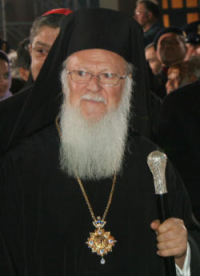
Patriarch Bartholomew
Prime Minister Tayyip Erdoğan has quietly led the gesture to the Orthodox, who face a shortage of candidates to succeed İstanbul-based Ecumenical Patriarch Bartholomew, 70, and serve on the Holy Synod, which administers patriarchate affairs.
Turkish law requires the patriarch to be a citizen. But the Orthodox community in Turkey, an overwhelmingly Muslim country, has fallen to some 3,000 from 120,000 a half-century ago, drastically shrinking the pool of potential future patriarchs.
"The specific call Erdoğan made to give citizenship to those who will take up an official position at the patriarchate came in response to the problems they have," İbrahim Kalın, Erdoğan's chief foreign-policy adviser, said in an interview.
Continue reading →
Deprecated: trim(): Passing null to parameter #1 ($string) of type string is deprecated in
/home/aoiusa/public_html/wp-content/plugins/sexybookmarks/public.php on line
388
Deprecated: trim(): Passing null to parameter #1 ($string) of type string is deprecated in
/home/aoiusa/public_html/wp-content/plugins/sexybookmarks/public.php on line
394
Deprecated: trim(): Passing null to parameter #1 ($string) of type string is deprecated in
/home/aoiusa/public_html/wp-content/plugins/sexybookmarks/public.php on line
400
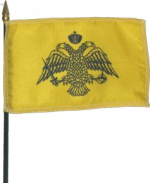
Word on the street is that Met. Methodios of Boston (GOA) told his priests yesterday that each parish must start flying the patriarchal flag.
The Archons are donating the flag pole.
Deprecated: str_replace(): Passing null to parameter #3 ($subject) of type array|string is deprecated in
/home/aoiusa/public_html/wp-content/themes/genesis/lib/functions/image.php on line
116
class="post-5286 post type-post status-publish format-standard hentry category-blog-archive tag-ecumenical-patriarch-bartholomew-i tag-ecumenical-patriarchate tag-law tag-news tag-orthodox-church tag-politics tag-religious-freedom tag-turkey tag-turkish-deep-state entry">
Deprecated: trim(): Passing null to parameter #1 ($string) of type string is deprecated in
/home/aoiusa/public_html/wp-content/plugins/sexybookmarks/public.php on line
388
Deprecated: trim(): Passing null to parameter #1 ($string) of type string is deprecated in
/home/aoiusa/public_html/wp-content/plugins/sexybookmarks/public.php on line
394
Deprecated: trim(): Passing null to parameter #1 ($string) of type string is deprecated in
/home/aoiusa/public_html/wp-content/plugins/sexybookmarks/public.php on line
400
’We cannot breathe, the Patriarchate is dying,’ says patriarch
ASLI AYDINTAŞBAŞ
ISTANBUL – Milliyet
Thursday, December 24, 2009
Following criticism of his controversial statement to a U.S. television network describing his community’s problems, Greek Orthodox Patriarch Bartholomew says his comments were emphasized, but the serious problem of opening Halki seminary needs to be addressed.
Criticized for telling U.S. network CBS that he felt “crucified in Turkey,” in an interview he told daily Milliyet, “We are without oxygen, the Patriarchate is dying.”
He said the interview with CBS was not planned and that the media had emphasized the crucifixion quote. He said this was a metaphor for detailing Greeks’ problems in Turkey, highlighted by the issue of the Halki seminary located on Heybeliada, one of Istanbul’s Princes’ Islands in Marmara Sea.
“What will we do, if we cannot raise men of the cloth? Our metropolitan bishops in Europe are over 70 years old. The ones here are 75 years old. Now, who will I nominate to this post,” said the patriarch, who will turn 70 this February. “Why should we nominate people to this post who were not raised in Turkey and educated on Heybeliada?” he asked.
“The seminary was open during Ottoman rule; [Mustafa Kemal] Atatürk [founder of Turkish Republic] did not close it down. But it was wrongly closed down in 1971, since it did not have university status but was a vocational school for higher education,” he said. Continue reading →
Deprecated: str_replace(): Passing null to parameter #3 ($subject) of type array|string is deprecated in
/home/aoiusa/public_html/wp-content/themes/genesis/lib/functions/image.php on line
116
class="post-5268 post type-post status-publish format-standard hentry category-blog-archive tag-ecumenical-patriarch-bartholomew-i tag-ecumenical-patriarchate tag-greek-orthodox tag-law tag-news tag-orthodox-church tag-politics tag-religious-freedom tag-turkey entry">
Deprecated: trim(): Passing null to parameter #1 ($string) of type string is deprecated in
/home/aoiusa/public_html/wp-content/plugins/sexybookmarks/public.php on line
388
Deprecated: trim(): Passing null to parameter #1 ($string) of type string is deprecated in
/home/aoiusa/public_html/wp-content/plugins/sexybookmarks/public.php on line
394
Deprecated: trim(): Passing null to parameter #1 ($string) of type string is deprecated in
/home/aoiusa/public_html/wp-content/plugins/sexybookmarks/public.php on line
400
From Today’s Zaman (Dec. 24). No statement yet on the Patriarchate’s site.
The patriarchate’s statement said: “There are similar idioms in all languages, and they are not evaluated in their narrow meanings but in their broad sense in that language. While answering questions in that regard, the patriarch obviously did not intend to imply any pressure from our government.” The statement also said that there was a need to make a public announcement about the issue because the patriarch’s words were interpreted in a way that goes beyond their meaning.
Turkish government officials continue to denounce the patriarch for his crucifixion remark:
In İzmir, speaking at a conference organized by the ruling Justice and Development Party (AK Party), Deputy Prime Minister Bülent Arınç called the patriarch’s criticism “unacceptable,” while reiterating that Turkey doesn’t consider the patriarchate to be ecumenical in line with the Lausanne Treaty of 1923, which governs the status of the Greek Orthodox Church in Turkey. Continue reading →
Deprecated: str_replace(): Passing null to parameter #3 ($subject) of type array|string is deprecated in
/home/aoiusa/public_html/wp-content/themes/genesis/lib/functions/image.php on line
116
class="post-5225 post type-post status-publish format-standard hentry category-blog-archive tag-charter-of-privileges-to-christians tag-ecumenical-patriarchate tag-faith-an-endowment-for-orthodoxy-and-hellenism tag-hellenism-and-orthodoxy tag-islam tag-news tag-orthodox-church tag-politics tag-religious-freedom tag-turkey entry">
Deprecated: trim(): Passing null to parameter #1 ($string) of type string is deprecated in
/home/aoiusa/public_html/wp-content/plugins/sexybookmarks/public.php on line
388
Deprecated: trim(): Passing null to parameter #1 ($string) of type string is deprecated in
/home/aoiusa/public_html/wp-content/plugins/sexybookmarks/public.php on line
394
Deprecated: trim(): Passing null to parameter #1 ($string) of type string is deprecated in
/home/aoiusa/public_html/wp-content/plugins/sexybookmarks/public.php on line
400
An unsigned “call to action” in defense of the Ecumenical Patriarchate was published today on the “Faith: An Endowment for Orthodoxy and Hellenism” Web site. This appeal asks readers to sign a Web-based petition which demands that the “Turkish government … take steps to guarantee the recognition, safety, and protection of His All Holiness, Ecumenical Patriarch Bartholomew, the Patriarchate, the Seminary of Halki, and the ethnic minority of Greek Christians living in Turkey.”
The “call to action” placed the weight of its argument for religious freedom and human rights on a “Charter of Privileges to Christians” purported to have been signed by Muhammad, the founder of Islam, in the 7th Century. The “call to action” described this charter as emblematic of the “established universal position” of human rights that also inspired the U.S. Constitution.
The appeal:
To those who were privileged enough to see the, CBS 60 Minutes story about His All Holiness, Ecumenical Patriarch Bartholomew, that aired on December 20, 2009,
The segment focused on the challenges and struggles His All Holiness faces to sustain the Patriarchate, as well as the sacred early Christian churches and monuments in Turkey, under a government which has continually refused to recognize his title as Ecumenical Patriarch and also legitimize the legal status of the Patriarchate and related Greek properties. In the words of His All Holiness, Ecumenical Patriarch Bartholomew, the leader of the Greek Orthodox Church and approximately 300 million followers around the world, he and other Greek-Christians living in Turkey, “are treated as second class citizens.”
One of the most compelling and factually important aspects of the segment was the reference to the Prophet Muhammad’s Charter of Privileges to Christians, in his letter to the Monks of St. Catherine Monastery. In 628 A.D., the Prophet Muhammad granted this Charter of several clauses covering all aspects of human rights and religious tolerance, including the protection of Christians, their freedom of worship and movement, their freedom to appoint their own judges and to own and maintain their property and religious houses of worship, and the right to protection in war. (An English translation of the Prophet Muhammad’s Charter of Privileges, by Dr. A Zahoor and Dr. Z. Haq can be found at http://www.cyberistan.org/islamic/charter1.html Continue reading →
Fatal error: Uncaught Error: Call to undefined function nuthemes_content_nav() in /home/aoiusa/public_html/wp-content/themes/prose/archive.php:58
Stack trace:
#0 /home/aoiusa/public_html/wp-includes/template-loader.php(106): include()
#1 /home/aoiusa/public_html/wp-blog-header.php(19): require_once('/home/aoiusa/pu...')
#2 /home/aoiusa/public_html/index.php(17): require('/home/aoiusa/pu...')
#3 {main}
thrown in
/home/aoiusa/public_html/wp-content/themes/prose/archive.php on line
58